Rectal Bleeding: Diagnostics and Clinical Urgency
Understanding the origins of gastrointestinal bleeding and when to seek immediate medical evaluation.
Understanding the Symptom
Finding blood on toilet paper, in the bowl, or mixed into your stool is a jarring moment for anyone. Medically, visible bright red blood from the rectum is called hematochezia. Rectal bleeding isn't a disease in itself — it's a symptom pointing to something else. You should always get it checked by a healthcare provider, but the possible causes range enormously: from common, easily treated local irritations to serious inflammatory or oncological conditions.
Color as a Diagnostic Clue
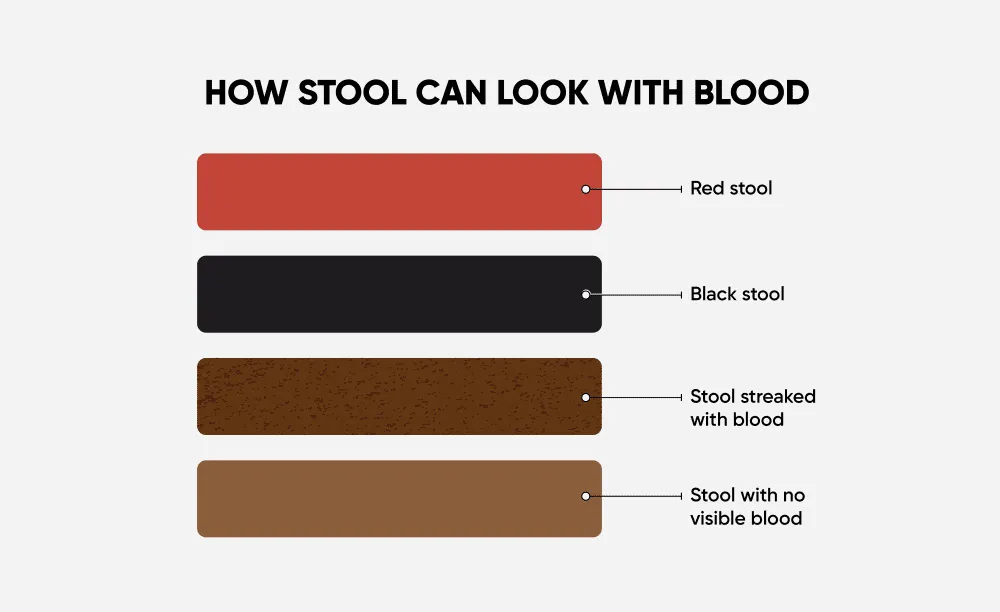
One of the first things a gastroenterologist looks at is the color of the blood — it's a surprisingly informative diagnostic clue. As blood travels through different parts of the GI tract, it's exposed to digestive enzymes and bacteria, which change its appearance depending on where the bleeding originates.
- Bright Red (Hematochezia): Fresh, bright red blood typically indicates that the bleeding is occurring in the lower GI tract—specifically the colon, rectum, or anus. Because the bleeding is close to the exit, the blood has not had time to be digested or oxidize.
- Dark Red or Maroon: This coloration suggests that the bleeding is originating higher up in the colon or in the small intestine. The darker hue indicates the blood has spent a longer duration traveling through the bowel.
- Black and Tarry (Melena): Stools that are distinctly black, sticky, and foul-smelling (melena) are a critical medical warning sign. This indicates bleeding in the upper GI tract, most commonly a bleeding stomach ulcer or duodenal ulcer. The blood turns black because it has been fully exposed to gastric acids and digestive enzymes.
- Occult Bleeding: Not all bleeding is visible to the naked eye. Microscopic amounts of blood hidden within normal-looking stool (occult blood) are typically discovered during routine lab work, such as a Fecal Occult Blood Test (FOBT), which is a primary screening tool for early-stage colorectal cancer.
Common Pathological Causes
Benign Anorectal Conditions
Most cases of bright red rectal bleeding come down to benign causes tied to mechanical strain. Hemorrhoids — swollen, varicose-like veins in the rectum or anus — can rupture easily when pressure builds during a bowel movement. Passing very hard, dry stools (Bristol Scale Type 1 or 2) can also cause an Anal Fissure, a small but painful tear in the delicate mucosal lining of the anal canal. Both conditions are closely tied to chronic constipation and typically come with sharp pain during defecation.
Use accurate data in your favor
Fissures and hemorrhoids get worse with physical strain, so figuring out what's causing your constipation is the real first step toward preventing recurring rectal bleeding. If you're seeing spots of blood or experiencing pain, start logging the frequency and severity right away in your digital poop diary — that data will be genuinely useful when you see your gastroenterologist.
Inflammatory and Infectious Disease
When the bowel lining is inflamed, the surrounding blood vessels become fragile and prone to bleeding. Inflammatory Bowel Disease (IBD) — encompassing Crohn’s disease and Ulcerative Colitis — causes chronic ulceration of the intestinal walls, leading to bloody diarrhea. Diverticulitis happens when small pouches in the colon wall get infected, sometimes triggering acute, heavy bleeding that can be surprisingly painless. Infectious Colitis (caused by bacteria like E. coli or C. difficile) and certain STIs like untreated gonorrhea or chlamydia can also produce significant mucosal bleeding.
Oncological Concerns
The most serious possibility behind unexplained rectal bleeding is colorectal cancer. Benign growths called colon polyps can develop slowly on the inner lining of the colon — and over time they can grow, bleed, and turn malignant. Because early-stage polyps and cancers often bleed only intermittently, any persistent or unexplained rectal bleeding warrants a colonoscopy to rule out an oncological cause.
Clinical Action and Tracking
There's no single treatment here — everything depends on what's actually causing the bleeding. Minor hemorrhoids often respond to topical OTC ointments and increased dietary fiber. IBD requires complex immunosuppressive therapy. Polyps need to be surgically removed. The diagnosis drives everything.
Urgent Warning: Seek emergency medical care immediately if the bleeding is heavy, accompanied by large blood clots, if you experience dizziness and fainting (signs of dangerous blood loss), or if your stool is black and tarry.
Decoding Rectal Bleeding by Color and Appearance
When a gastroenterologist hears “I saw blood,” two details matter immediately: color and how the blood was distributed. Those clues do not replace endoscopy, but they often narrow the probable source before testing begins. Blood changes appearance as it moves through the gastrointestinal tract because it is exposed to oxygen, digestive enzymes, bacteria, and time.
Bright red blood usually comes from the anorectal area
Bright red blood usually means the bleeding is close to the exit — the anus, anal canal, or rectum. Typical causes include hemorrhoids, anal fissures, radiation proctitis, rectal ulcers, and inflammation limited to the rectum. Blood seen only on the toilet paper, streaked on the outside of the stool, or dripping into the bowl after the stool has passed strongly suggests a distal source. That pattern does not prove hemorrhoids, but it makes an anorectal explanation more likely than a colonic one.
Dark red or burgundy blood points farther upstream
Dark red or burgundy blood usually suggests bleeding from the colon rather than just the anal canal. Polyps, colorectal cancer, inflammatory bowel disease, diverticular bleeding, and ischemic colitis can all present this way. The most useful visual distinction is whether the blood was mixed into the stool or simply coating it. Mixed blood suggests the stool and blood traveled together for a while, which makes a source higher in the colon more likely.
Maroon stool and clots can indicate a larger lower GI bleed
Maroon stool occupies the middle ground between bright hematochezia and melena. It often reflects faster bleeding from the right colon or small bowel, especially in diverticular bleeding, angiodysplasia, postoperative bleeding, or small-bowel lesions. Patients often describe it as wine-colored, reddish-brown, or dark clotted blood. When maroon output is repeated, mixed with clots, or accompanied by weakness or dizziness, it should be treated as potentially significant lower GI bleeding.
Black, tarry stool is melena until proven otherwise
Black, sticky, foul-smelling stool is classic melena, which usually indicates bleeding from the esophagus, stomach, or duodenum. Peptic ulcers, gastritis, varices, and upper GI tumors are common causes. This is different from dark stool caused by iron tablets or bismuth, which may look black but usually lacks the tarry texture and distinctive odor of digested blood. True melena generally requires same-day medical assessment.
The visual pattern is clinically useful
Blood coating the stool usually points to a distal source. Blood mixed throughout the stool suggests bleeding earlier in the colon. Mostly red water, clots, or repeated bloody output without much stool raises concern for active bleeding that may need urgent evaluation. A careful description of what you saw often determines whether the first step is an anorectal exam, colonoscopy, or emergency care.
Most Common Causes at Each Life Stage
The same symptom carries different weight at different ages. A small smear of bright red blood in a constipated 23-year-old and intermittent blood mixed into stool in a 58-year-old are investigated very differently because the background probability of serious disease changes with age, hormones, medications, and family history.
Under 40: benign anorectal causes are common, but not exclusive
In younger adults, hemorrhoids and anal fissures are still the most common explanations, especially when bleeding follows hard stools, straining, prolonged sitting, or heavy lifting. But younger patients also develop ulcerative colitis, Crohn’s colitis, infectious colitis, and bleeding polyps. When bleeding comes with diarrhea, urgency, abdominal pain, weight loss, fever, or nighttime symptoms, the differential shifts quickly away from “just hemorrhoids.” Age under 40 lowers cancer risk, but it does not eliminate it — particularly when there is a strong family history, iron-deficiency anemia, or persistent unexplained bleeding.
Pregnancy and postpartum bleeding usually has a mechanical explanation
Pregnancy increases pelvic venous pressure, slows bowel motility, and often causes constipation, which is why hemorrhoids are so common in late pregnancy and after delivery. Anal fissures are also frequent, especially after hard stools or labor-related strain. Still, pregnancy does not prevent inflammatory bowel disease, infection, or neoplastic disease. Recurrent bleeding that is mixed into stool or accompanied by diarrhea and abdominal pain still needs clinical review.
Over 40: the workup becomes more aggressive
After 40, the same benign causes still occur, but colon polyps, diverticular disease, angiodysplasia, ischemic colitis, and colorectal cancer become much more relevant. Current average-risk colorectal cancer screening typically begins at 45, so rectal bleeding after that age is interpreted in the context of screening-age risk. One common diagnostic mistake is to find hemorrhoids and stop looking, even though hemorrhoids do not rule out a second bleeding lesion higher in the colon.
Post-menopausal patients need a lower threshold for investigation
After menopause, any new bleeding seen in the toilet deserves careful source identification because patients are not always certain whether blood came from the rectum, urine, or genital tract. When the source is clearly rectal, clinicians think more readily about neoplasia, vascular lesions, medication-related bleeding, and ischemic disease. Many post-menopausal adults also take aspirin, NSAIDs, or anticoagulants, which can worsen both upper and lower GI bleeding. The practical rule is simple: the older the patient, the lower the threshold for colonoscopy and laboratory work.
When to Go to the Emergency Room vs. Schedule a GP Visit
Not every episode of rectal bleeding requires the emergency department, but some presentations do. The decision depends on volume, color, associated symptoms, and underlying risk factors.
Go to the ER for heavy bleeding, black stool, or signs of blood loss
Emergency care is appropriate when you pass large amounts of bright red blood, repeated bloody bowel movements, visible clots, or mostly blood rather than stool. The same applies if you feel dizzy, faint, short of breath, unusually weak, confused, or tachycardic. Those are hemodynamic warning signs. Black tarry stool belongs in the same category because melena can reflect a bleeding ulcer or varices. Severe abdominal pain with bleeding is another red flag and raises concern for ischemic colitis, severe inflammatory colitis, or other acute pathology. Patients with cirrhosis, portal hypertension, or anticoagulant use should have an especially low threshold for emergency evaluation.
A GP visit is reasonable for small, stable, clearly distal bleeding
A small bright red smear on the paper after a hard bowel movement, without dizziness, black stool, fever, or significant pain, is usually appropriate for prompt outpatient assessment rather than the ER. A GP can examine the anal canal, review medications, check for anemia, and treat constipation or fissures. The mistake is not choosing the GP over the ER — the mistake is waiting months because the amount seems small.
When colonoscopy becomes the next step
Some situations make colonoscopy much harder to postpone: age over 45, persistent unexplained bleeding, blood mixed into the stool, change in bowel habits, weight loss, iron-deficiency anemia, positive occult blood testing, or a personal or family history of colorectal cancer, advanced polyps, or inflammatory bowel disease. Even in a stable patient, a new pattern — such as darker blood or bleeding no longer tied to constipation — should trigger escalation.
The Diagnostic Workup
The workup for rectal bleeding proceeds in layers. Doctors start with the simplest steps that can localize the source quickly, then move to more extensive imaging or endoscopy depending on what the history and exam suggest.
Initial assessment: history, vitals, labs, and rectal exam
The first questions are basic but clinically powerful: what color was the blood, was it on the paper or mixed into the stool, was there pain, diarrhea, constipation, weight loss, fever, NSAID use, anticoagulants, prior colonoscopy findings, or family history of bowel disease? Vital signs help determine whether bleeding is minor or physiologically significant. A digital rectal exam can reveal external hemorrhoids, thrombosis, fissures near the anal verge, palpable rectal masses, active blood, or black stool suggestive of melena. Basic blood work commonly includes a complete blood count, chemistry panel, and coagulation studies; chronic bleeding may also prompt iron studies.
Anoscopy and proctoscopy for anorectal causes
When the story sounds clearly distal — bright red blood, pain with defecation, or bleeding confined to wiping — anoscopy or proctoscopy is often the next step. These office procedures directly inspect the anal canal and lower rectum for internal hemorrhoids, fissures, proctitis, rectal ulcers, or low rectal lesions. In the right patient, they can answer the key question: is this truly an anorectal problem, or does the workup need to move higher?
Flexible sigmoidoscopy and full colonoscopy
Flexible sigmoidoscopy examines the rectum, sigmoid colon, and part of the descending colon. It is useful when symptoms suggest distal inflammatory disease or a left-sided lesion. Colonoscopy is the definitive test for many patients because it visualizes the entire colon and allows biopsy or treatment during the same procedure. Bleeding polyps can be removed, inflammatory changes sampled, vascular lesions treated, and cancers identified directly. For persistent unexplained rectal bleeding, colonoscopy often provides the answer that history alone cannot.
Where CT colonography fits
CT colonography, or virtual colonoscopy, has a narrower role. It can evaluate the colon when standard colonoscopy is incomplete or not feasible, but it cannot biopsy, cauterize, or remove lesions. That is why it is less useful when active bleeding is the problem: if it finds a suspicious lesion, a conventional colonoscopy is still usually needed.
Upper endoscopy, CT angiography, and tagged RBC scans
When the stool is black and tarry, the workup shifts upward. Upper endoscopy is the standard test for melena because most upper GI bleeding originates in the esophagus, stomach, or duodenum. When lower GI bleeding is brisk enough that stool is mostly blood, colonoscopy may be difficult initially because visualization is poor. In that situation, CT angiography can rapidly identify active arterial bleeding, while a tagged red blood cell scan can help localize slower or intermittent bleeding. Those imaging studies are especially useful when clinicians are dealing with ongoing blood loss rather than a small intermittent smear.
Why Logging Rectal Bleeding with Happy Poop Matters
Rectal bleeding is one of those symptoms that patients often remember imprecisely. By the time the appointment arrives, the description becomes vague: “a few times,” “kind of dark,” “maybe after constipation.” That is understandable, but it is weak clinical evidence. A gastroenterologist can do much more with a time-stamped record showing stool form, stool color, blood appearance, quantity, and frequency.
In Happy Poop, you can document each episode using the stool color field, the blood-related trait, quantity, notes, and the exact date and time. That turns a symptom into a usable timeline. “Bright red spotting only after Bristol 1 stools for two weeks” points in a different direction from “dark red blood mixed into softer stools on six separate mornings.” That difference matters in deciding whether the likely next step is constipation treatment, anoscopy, colonoscopy, or urgent assessment.

If you are unsure how to classify the bowel movement itself, the AI Analyze button in the poop log entry screen can evaluate a photo and auto-fill the Bristol type, color, and quantity. You then add the blood trait and any context, such as pain, straining, or whether the blood was mixed into the stool. That makes repeat entries more standardized and less dependent on guesswork.
Best practice: each time you see blood, record the color, whether it was on the paper, on the stool, mixed into the stool, or mostly in the water, and whether the bowel movement hurt. Those details are often enough to change the entire diagnostic path.
The PDF export then turns that log into a clean clinical timeline you can share with your GP or gastroenterologist. Frequency, clustering, worsening color, association with constipation or diarrhea, and recurrence after treatment become visible immediately. Zeps, the beetle mascot AI assistant in the Dashboard, adds another layer by analysing your poop and pee history, answering questions about your recorded pattern, and helping you notice when the story has changed. That is valuable because one of the most common delays in rectal bleeding is the assumption that a new episode is “probably just hemorrhoids again.” A documented change in pattern is often the sign that it is time to stop assuming and get evaluated.
Download Happy Poop and start building a documented history before your next appointment:






Sources & Medical References: