What Causes Constipation? The Physiology of Colonic Transit
Understanding the biomechanics of water absorption, pelvic floor coordination, and delayed bowel motility.
The Biological Mechanism of Constipation
Constipation starts with the colon. As food moves through the stomach and small intestine, vital nutrients are absorbed, leaving a liquid slurry of waste (chyme). When this waste enters the colon, the body begins a careful reclamation process: the colon's primary job is to extract water and essential salts from the waste and solidify it into stool.
Constipation happens when transit time—the speed at which waste moves through your digestive tract—slows down too much. When food moves too sluggishly, the colon gets too much time to absorb water. The result is stool that's severely dehydrated, hard, and physically difficult to pass (typically presenting as Types 1 or 2 on the Bristol Stool Scale).
Clinical Symptoms and Presentation
While occasional irregularity is normal, clinical constipation is generally diagnosed when an individual experiences one or more of the following symptoms persistently:
- Having fewer than three complete bowel movements per week.
- Passing stools that are extremely dry, hard, and lumpy.
- Experiencing physical pain or requiring severe straining to pass a stool.
- Feeling a sense of incomplete evacuation (tenesmus), where the bowel still feels full after a movement.
- Accompanying systemic symptoms such as abdominal cramping, severe bloating, and nausea.
Lifestyle and Dietary Triggers
In the absence of underlying disease, the vast majority of constipation cases are driven by modern lifestyle and dietary habits.
- Lack of Dietary Fiber: Fiber acts as a bulking agent. Soluble fiber absorbs water to keep stool soft, while insoluble fiber acts as a "sweeper" to keep things moving. A diet heavy in processed foods, milk, and cheese, but low in vegetables and whole grains, inevitably slows transit time.
- Dehydration: If the body is systemically dehydrated, the colon will aggressively extract as much water as possible from the stool to preserve vital organ function.
- Sedentary Lifestyle: Physical movement stimulates peristalsis (the wave-like muscle contractions of the intestines). A lack of exercise leads to a "lazy" bowel.
- Ignoring the Urge: Repeatedly resisting the urge to have a bowel movement (often due to public restroom anxiety or busy work schedules) gradually desensitizes the nerves in the rectum, leading to chronic impaction.
The Hydration Connection
Because colonic transit is so heavily reliant on water, increasing fiber without increasing fluid intake can actually make constipation worse. Learn more about how hydration directly impacts your digestion here.
Take Control: The best way to identify what is slowing your transit time is to log your meals, fluid intake, and stool consistency. Start building your personal baseline today by using Happy Poop.
Medical and Pathological Causes
When lifestyle changes don't move the needle, it's time to look deeper. A physician will investigate potential pharmacological or structural causes.
Endocrine and Neurological Disorders
Your digestive system depends on precise hormonal and neurological signaling. Hypothyroidism (an underactive thyroid) slows the entire body's basal metabolic rate, directly dragging down intestinal motility. Neurological conditions like Parkinson's disease, Multiple Sclerosis, and spinal cord injuries disrupt the nerve signals traveling between the brain and the bowel.
Outlet Dysfunction and Pelvic Floor Issues
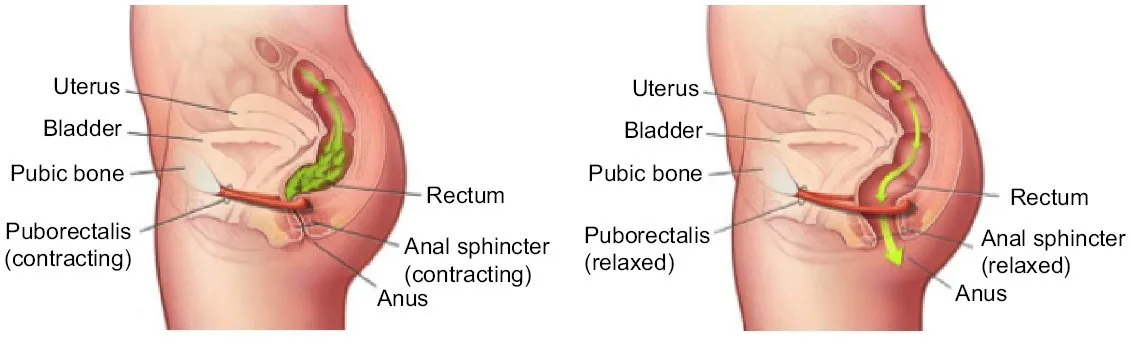
Sometimes the colon functions perfectly, but the exit mechanism fails. Outlet Dysfunction Constipation occurs due to a defect in the coordination of the pelvic floor muscles. During a healthy bowel movement, these muscles must relax simultaneously as the abdominal muscles contract. If they involuntarily contract instead (dyssynergic defecation), the stool cannot be expelled.
Structural and Systemic Diseases
Underlying structural problems—including intestinal obstructions, strictures, or tumors (including Colorectal Cancer)—can physically block the passage of stool. Systemic diseases like lupus, scleroderma, and amyloidosis can alter the connective tissue and muscle function of the gastrointestinal tract.
Pregnancy and Hormonal Shifts
Women are statistically more prone to constipation, particularly during pregnancy and the postpartum period. Two factors are mainly responsible. First, rising progesterone levels naturally relax smooth muscle tissue throughout the body, which significantly slows intestinal peristalsis. Second, as the fetus grows, the expanding uterus physically compresses the intestines and colon—a mechanical barrier that further slows the passage of waste.
Primary Constipation Subtypes: Not All the Same
“Constipation” sounds like a single problem, but clinically it describes several different physiologic patterns. That distinction matters because the right treatment for one subtype can be ineffective for another. Broadly, doctors think about chronic primary constipation in three groups: normal transit constipation, slow transit constipation, and defecatory disorders such as outlet obstruction or pelvic floor dyssynergia.
Normal transit constipation is the most common subtype. Despite the name, the person feels constipated: stools are hard, bowel movements are unsatisfying, and straining is common, even though stool may move through the colon at a roughly normal speed. This pattern often overlaps with inadequate fiber intake, low fluid intake, sedentary habits, and heightened sensitivity to stool consistency or rectal fullness. These patients often benefit from dietary change and osmotic laxatives because the issue is less about a paralyzed colon and more about stool characteristics and bowel habits.
Slow transit constipation is a different physiology. Here, the colon truly moves too slowly. High-amplitude propagated contractions are reduced, the urge to defecate may be infrequent, and stool can sit in the colon long enough for excessive water removal to occur. Patients often report going many days without a bowel movement, minimal urge despite a large stool burden, and prominent bloating. Slow transit can occur idiopathically, but it is also associated with neuropathic changes, autonomic dysfunction, diabetes, connective tissue disorders, and constipating medications.
Defecatory or outlet obstruction constipation occurs when stool reaches the rectum but cannot be expelled efficiently. The problem is often mechanical or functional at the pelvic outlet: pelvic floor dyssynergia, anismus, rectocele, or failure of rectal propulsion. These patients describe prolonged time on the toilet, a sense that stool is “right there” but will not come out, incomplete evacuation, and sometimes the need to press on the perineum or use a finger to help stool pass.
Knowing the subtype changes management. If the problem is mostly slow transit, the plan emphasizes pro-motility strategies and medication review. If the problem is outlet dysfunction, escalating laxatives alone may only worsen bloating while failing to solve evacuation. That is why gastroenterologists often ask about stool frequency, urge, straining, and the feeling of blockage before prescribing anything stronger than simple first-line therapy.
Medication-Induced Constipation: The Most Overlooked Cause
One of the most common reasons chronic constipation seems “mysterious” is that the cause is sitting in the medicine cabinet. Medication-induced constipation is frequently missed because patients often assume a pill that affects pain, blood pressure, allergies, or mood could not possibly be the reason they suddenly need to strain every morning.
Opioids are the classic and most potent constipating drugs. They activate peripheral mu-opioid receptors in the gut, reduce peristalsis, increase fluid absorption, and tighten sphincter tone. The result is opioid-induced constipation, which can persist even when patients eat well and drink plenty of water. Standard management often includes stimulant or osmotic laxatives, and for resistant cases doctors may prescribe peripherally acting mu-opioid receptor antagonists such as methylnaltrexone, naloxegol, or naldemedine.
Iron supplements are another major culprit, especially ferrous sulfate. Patients taking iron often notice darker stool, abdominal discomfort, and a marked shift toward Bristol Types 1 and 2. Sometimes simply changing the formulation, lowering the dose, switching to alternate-day dosing, or using IV iron when clinically indicated resolves a long-standing problem. Calcium channel blockers, particularly verapamil, can also slow intestinal smooth muscle activity enough to create persistent constipation.
Common over-the-counter products matter too. Antacids containing aluminum or calcium are well known to harden stool. Anticholinergic medications—a broad class that includes some antihistamines, tricyclic antidepressants, antipsychotics, and bladder medications—reduce parasympathetic signaling to the gut and slow transit. Anticonvulsants can contribute as well, especially when used in combination with other constipating drugs.
Medication review is one of the highest-yield interventions in chronic constipation. A patient may undergo weeks of fiber changes and laxative trials when the more direct solution is replacing a constipating medicine with an alternative, changing the dose, or adding a targeted bowel regimen from day one. Whenever constipation appears after starting a new medication—or becomes much worse after a dose increase—that timeline deserves serious attention.
Pelvic Floor Dysfunction and Anismus
A normal bowel movement requires more than stool arriving in the rectum. The abdominal wall has to increase pressure, the anal sphincter has to relax, and the puborectalis muscle has to loosen so the anorectal angle straightens. In a defecatory disorder such as anismus or pelvic floor dyssynergia, that sequence breaks down. Instead of relaxing, the pelvic floor contracts paradoxically, narrowing the exit right when the body is trying to evacuate.
Patients often describe a very specific symptom cluster: excessive straining, a feeling of blockage at the outlet, incomplete evacuation, repeated trips back to the toilet, and occasionally the need for perineal support or digital assistance. Some also report hemorrhoids or fissures from chronic pushing. Because stool can still reach the rectum, these patients may have a strong urge to go but still fail to empty effectively.
Diagnosis usually requires more than symptom history alone. Anorectal manometry measures pressure patterns and can show failure of sphincter relaxation during simulated defecation. The balloon expulsion test checks whether a person can expel a small water-filled balloon from the rectum within the expected time. Defecography adds structural detail and can reveal a rectocele, intussusception, or poor pelvic floor descent. These tests matter because outlet dysfunction can mimic slow transit constipation while requiring a very different treatment plan.
The best-supported treatment is not stronger laxatives; it is pelvic floor physical therapy with biofeedback. In guided biofeedback sessions, patients learn to relax the pelvic floor at the right moment and coordinate abdominal pressure more effectively. Published response rates are often reported around 70 to 80 percent, which is excellent for a chronic GI disorder. For the right patient, biofeedback is one of the clearest examples in gastroenterology of a therapy that directly corrects the underlying mechanism rather than just softening the stool and hoping for the best.
Evidence-Based Constipation Treatments Ranked
Not every constipation treatment carries the same evidence or suits every subtype. The most effective approach is stepwise and based on the likely mechanism.
- Lifestyle measures: For uncomplicated constipation, these remain the foundation. Most adults benefit from a total fiber intake of roughly 25-35 g/day, fluid intake around 1.5-2 liters/day unless medically restricted, regular meals, and physical activity. Fiber works best for patients with hard stool and low intake; it is less effective and sometimes poorly tolerated in severe slow-transit constipation or defecatory disorders.
- Osmotic laxatives: Polyethylene glycol (PEG/macrogol) is widely recommended as first-line pharmacologic therapy because it is effective, well tolerated, and not habit-forming. It holds water in the stool, softens stool consistency, and increases stool frequency without the cramping profile often seen with harsher agents.
- Stimulant laxatives: Senna and bisacodyl stimulate colonic contractions and are useful when osmotic therapy is not enough, particularly short-term or as rescue treatment. They can cause cramping, so they are often introduced thoughtfully rather than used reflexively every day.
- Secretagogues: Newer agents such as linaclotide, lubiprostone, and plecanatide increase intestinal fluid secretion and can be very helpful in chronic idiopathic constipation, especially when there is overlap with IBS and abdominal pain.
- Prokinetics: Prucalopride, a selective 5-HT4 agonist, is reserved for more severe chronic constipation, particularly when slow transit is suspected and first-line measures have failed. It directly enhances colonic motility rather than merely altering stool water content.
- Targeted techniques for neurogenic bowel: In patients with spinal cord injury, multiple sclerosis, or other neurogenic causes, structured bowel routines, suppositories, and digital rectal stimulation may be central components of care.
What ranks lower is indiscriminate escalation. If a patient with pelvic floor dyssynergia is given progressively stronger laxatives without recognition of the outlet problem, the colon may fill faster while evacuation remains impaired. In other words, the best constipation treatment is the one matched to the mechanism—not simply the strongest one on the shelf.
How Happy Poop Turns Constipation from Vague to Visible
Constipation is easy to underestimate because memory compresses it. People often remember the worst day, not the overall pattern. A structured log changes that. When you record every bowel movement in Happy Poop—especially Bristol type, duration, quantity, and a custom straining trait—you start to see whether the problem is isolated hard stool, long gaps between movements, or repeated incomplete evacuation despite daily attempts.
Over a few weeks, those entries can reveal patterns that are clinically meaningful. A person with mostly daily stools but frequent straining and Types 1-2 may look more like normal transit constipation with hard stool. Someone with very infrequent entries, little urge, and long intervals between bowel movements may fit a slow-transit picture. A person who only seems able to go during a narrow morning window, or who logs long toilet sessions, repeated morning attempts, and incomplete evacuation traits, may be showing an outlet pattern that deserves pelvic floor evaluation.
The visual summaries help too. Happy Poop's charts can show your 7-day and 30-day Bristol type average, which is often more informative than any single bad day. If your monthly average drifts steadily toward Types 1 and 2, that is a far stronger signal than a one-off hard stool after travel. You can also compare stool patterns with hydration, meals, exercise, or medication changes to see whether constipation worsened after iron, after a vacation, or only on workdays.
The AI Analyze tool reduces friction when you are trying to log consistently. At the log entry screen, a photo can help auto-fill Bristol type, color, and quantity, which is useful when you are monitoring whether stool is becoming progressively harder or smaller. On the Dashboard, Zeps can review your history and summarize trends in frequency, stool form, and straining, offering personalized suggestions based on the pattern it sees rather than on a single isolated entry.

When constipation is logged consistently, it stops being a vague complaint and becomes a pattern you can actually work with: how often you go, how hard the stool is, how long it takes, and whether the problem is getting better or drifting worse month by month.






Sources & Medical References: