The Bristol Stool Scale: Clinical Physiology and Transit Time Analysis
An in-depth guide to the global medical standard for assessing colonic function and digestive morphology.
Origins and Clinical Purpose
If you've ever seen a doctor about digestive issues, you've probably encountered the Bristol Stool Scale — also known in medical literature as the Meyers Scale or the Bristol Stool Form Scale (BSFS). It's a rigorously validated clinical tool used by gastroenterologists, researchers, and dietitians worldwide. It was developed and published in 1997 by Dr. Stephen Lewis and Dr. Ken Heaton at the University Department of Medicine, Bristol Royal Infirmary, with one clear goal: to standardize the highly subjective categorization of human feces.
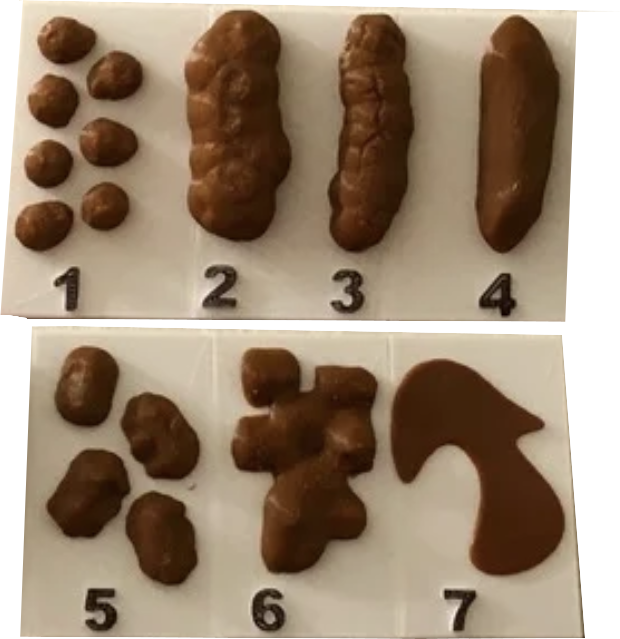
Before it existed, describing digestive issues was a mess of vague, subjective language — making it genuinely hard for doctors to gauge the severity of what a patient was experiencing. The scale solved that by establishing seven distinct morphological categories, running from severe constipation all the way to acute diarrhea. That gave clinicians a shared, objective visual language. Today it's a cornerstone in diagnosing and managing functional bowel disorders, most notably Irritable Bowel Syndrome (IBS).
The Physiology of Colonic Transit Time
To get why the Bristol Scale matters clinically, it helps to understand what the large intestine (the colon) actually does. Its primary job isn't digestion — that's mostly handled by the stomach and small intestine. The colon's role is to absorb water and electrolytes, and to help synthesize certain vitamins through the gut microbiome. When the liquid slurry of digested food (chyme) arrives from the small intestine, it's heavily saturated with water.
What a stool looks like — its shape and consistency — is almost entirely determined by one thing: how long it spent in the colon. That's colonic transit time. The colon moves waste forward through peristalsis, a series of wave-like muscle contractions, and the entire time, its mucosal lining is pulling water out of the passing material. The longer the transit, the more water gets extracted, and the harder and drier the stool becomes. Flip it around, and a transit that's too fast means the colon doesn't have time to do its job — resulting in liquid, unformed stools.
Detailed Morphological Breakdown
The seven types of the Bristol scale aren't just descriptive labels — they map a spectrum of colonic function, from dangerous prolonged stasis all the way to hypermotility.
Types 1 & 2: Severe and Mild Constipation
Type 1 is characterized by separate, hard, and severely dried-out lumps — often resembling nuts or small pebbles. These indicate a prolonged colonic transit time, sometimes meaning the waste has sat in the bowel for several days. With nearly all moisture extracted, they lack lubrication and frequently require intense straining to pass, which can cause painful micro-tears in the anal canal. Type 2 looks like a single sausage-shaped mass, but its surface is heavily lumpy and compacted. Think of it as a cluster of Type 1 lumps that fibrous tissue has bound together — it's still chronic constipation, just a step less severe.
Types 3 & 4: Optimal Physiological Function
Type 3 keeps the sausage shape but shows distinct cracking on its surface — transit time is a touch slow, but hydration is generally acceptable. Type 4 is the clinical ideal: a smooth, continuous, sausage or snake-like form. That consistency points to a well-calibrated transit time (typically 24 to 72 hours), optimal dietary fiber, and good hydration. It's cohesive enough to stay intact during evacuation but soft enough to pass without any straining or discomfort.
Types 5, 6 & 7: Hypermotility and Diarrhea
Type 5 appears as soft, distinct blobs with relatively clear edges. Easy to pass, yes — but that morphology suggests transit is moving too fast, or there's not enough dietary bulk (insoluble fiber) to bind the waste together properly. Type 6 is fluffy, poorly defined pieces with ragged, mushy edges. That's significant hypermotility — the colon is expelling waste before it's had a chance to absorb adequate water, and it often comes with a strong sense of urgency. Finally, Type 7 is entirely liquid with no solid matter at all. That's clinical diarrhea, caused by a severe breakdown in the colonic mucosa's ability to absorb water — typically triggered by viral or bacterial infections, acute food poisoning, or a severe inflammatory bowel response.
You can use the tool below to check the Bristol type based on the appearance of your poop.
Bristol Scale Quick Check
Select the image that most closely matches your stool:







Clinical Validation and Epidemiological Data
The Bristol Scale is more than a communication tool — it's a well-validated epidemiological metric backed by real data. In the foundational validation studies by Lewis and Heaton, some striking demographic patterns emerged. The data showed a clear physiological divergence between genders: Types 1 and 2 (constipation) were statistically far more prevalent in women, while Types 5 and 6 (rapid transit) showed up more frequently in men.
The scale also proved instrumental in diagnosing tenesmus — the distressing sensation of incomplete defecation despite an empty rectum. The foundational research found that an overwhelming 80% of individuals reporting tenesmus were actively passing Type 7 stools, which pointed to severe bowel inflammation — not retained fecal matter — as the source of that neurological sense of fullness. Today, routine tracking of Bristol Scale types alongside dietary intake lets both patients and gastroenterologists map these precise physiological correlations, opening the door to targeted interventions in hydration, fiber supplementation, and medical treatment.
The Bristol Scale in Clinical Practice Today
The Bristol Stool Scale is often introduced to patients as a simple chart, but in modern gastroenterology it functions as a standardized clinical measurement. That matters because words like “constipated,” “loose,” or “normal” are surprisingly unreliable. One patient's “diarrhea” may mean three urgent mushy bowel movements a day, while another uses the same word for a single soft stool after coffee. A numbered stool-form scale gives doctors, nurses, dietitians, and researchers a common language that can be tracked over time and compared across clinics, countries, and clinical trials.
Its most widely recognized role is in the Rome IV framework for diagnosing and subtyping IBS. Rome IV does not rely only on pain and frequency. It specifically asks whether abdominal pain is related to defecation and whether there has been a change in stool frequency or stool form. Stool form is then used to subtype IBS based on the proportion of abnormal bowel movements: IBS-C is defined by more than 25% of stools being Type 1 or 2 and fewer than 25% being Type 6 or 7; IBS-D is the reverse; IBS-M includes more than 25% in both groups. That is a practical example of why the Bristol chart has become so entrenched in GI medicine: it converts a vague symptom into a reproducible diagnostic criterion.
Researchers use the same framework in drug development. Trials for chronic idiopathic constipation, opioid-induced constipation, IBS-C, IBS-D, and other motility disorders routinely measure Bristol type alongside stool frequency, urgency, straining, and abdominal pain. In constipation trials, a meaningful response is not just “more bowel movements,” but a shift away from hard Type 1 or 2 stools toward softer, passable Type 3 or 4 stools. In diarrhea studies, the opposite is true: investigators want to see fewer Type 6 and 7 stools and less urgency, without pushing the patient into constipation. Because it is simple and validated, the Bristol Scale works well as an endpoint that can be collected daily in patient diaries without expensive transit studies.
Outside specialist clinics, the chart is heavily used in hospitals, rehabilitation units, and long-term care settings. Nursing bowel charts in care homes frequently record stool frequency and Bristol type because older adults may not clearly describe symptoms, especially when they have dementia, mobility limitations, or multiple medications. A run of Type 1 and 2 stools in an older patient on opioids can be an early warning sign of worsening constipation, fecal impaction, reduced fluid intake, or inadequate bowel regimens. A sudden cluster of Type 6 or 7 stools may instead raise concern for laxative overuse, antibiotic-associated diarrhea, enteral feeding intolerance, or infectious gastroenteritis. In other words, the scale supports early intervention before the patient ends up in pain or in the emergency department.
It is also useful after surgery. In enhanced recovery protocols following colorectal, gynecologic, or other abdominal operations, clinicians watch for the return of bowel function as a marker that the gut is waking up. The first postoperative bowel movement is not just a box to tick; its form can reveal whether the patient is still slowed by opioids and ileus, whether hydration is adequate, or whether the bowel is now moving too quickly after antibiotics or nutritional changes. After bowel resections, ostomy reversal, or pelvic floor procedures, serial Bristol logging helps teams distinguish expected short-term looseness from patterns that suggest obstruction, severe constipation, bile acid diarrhea, or anastomotic complications.
Clinically, the most useful question is not “What was your stool like once?” but “What pattern have you had over the last two weeks?” A trend toward Types 1 to 2 or Types 6 to 7 is usually more informative than any single bowel movement.
That same logic is why gastroenterologists often ask patients to keep a stool diary before appointments. A two-week record of stool form, frequency, urgency, bleeding, abdominal pain, and diet can reveal patterns that are otherwise invisible in a short office visit. It can show mixed IBS, identify medication side effects, and help separate functional bowel disorders from acute infections or inflammatory disease. The Bristol Scale is not a diagnosis by itself, but in everyday practice it is one of the fastest ways to connect symptoms with physiology.
What Factors Influence Your Bristol Type Day-to-Day
Many people assume stool form should be identical every day, but healthy digestion is more dynamic than that. A change from Type 4 to Type 3 after a dehydrating day, or a temporary move toward Type 5 after a large, fiber-rich meal, can happen without indicating disease. What matters is how often those shifts occur, how extreme they are, and whether they come with pain, urgency, bleeding, weight loss, fever, or other warning signs. Understanding the common daily drivers makes the Bristol Scale much more useful.
Diet, Fiber, and Hydration
Fiber is one of the biggest determinants of stool form, but not all fiber behaves the same way. Soluble fiber — found in foods such as oats, psyllium, chia, beans, and many fruits — absorbs water and forms a gel, which can soften hard stool and also add structure to stool that is too loose. Insoluble fiber, found in wheat bran, many vegetables, nuts, and seeds, adds bulk and can help speed transit in some people. Adults are commonly advised to aim for roughly 25 to 38 grams of fiber per day, yet many people eat far less. A low-fiber pattern often produces smaller, drier stools that drift toward Types 1 to 3. On the other hand, rapidly increasing fiber without enough water can worsen bloating and make constipation feel even more uncomfortable.
Hydration matters for the same reason. The colon is designed to reclaim water; when the body senses reduced fluid availability, it will conserve more aggressively, and stool tends to become firmer. That does not mean every hard stool is caused by low water intake, but dehydration, hot weather, long flights, alcohol, vigorous exercise, and illness can all push stool form downward. The opposite can happen with large amounts of coffee, alcohol, or sugar alcohols such as sorbitol and xylitol, which may speed transit or draw water into the bowel and nudge stool toward Types 5 to 7.
Stress, Sleep, and the Gut-Brain Axis
The gut is wired directly into the nervous system. Through the gut-brain axis, psychological stress can alter motility, secretion, visceral sensitivity, and even the way the pelvic floor coordinates a bowel movement. Some people react to stress with rapid transit and urgent Type 6 stools before an exam, public speaking event, or difficult conversation. Others respond by “locking up,” with incomplete evacuation and Type 1 or 2 stools during periods of anxiety. Neither pattern is imaginary; both reflect real changes in intestinal signaling.
Sleep disruption can amplify the same problem. Shift work, jet lag, very late meals, and short sleep can disturb circadian rhythms that help coordinate digestion. Poor sleep is associated with worse IBS symptoms and less predictable bowel habits. If your Bristol type is stable on weekends but erratic during workweeks, the cause may not be food alone — it may be a combination of stress load, sleep debt, coffee timing, and missed meals.
Medications, Hormones, and Daily Routine
Medication effects are one of the most overlooked explanations for a sudden stool-form change. Opioid pain medicines are classic causes of Type 1 and 2 stools because they slow intestinal motility and increase fluid absorption. Iron supplements, calcium supplements, some antacids, and many anticholinergic drugs can do the same. By contrast, magnesium-containing products, metformin, many antibiotics, some antidepressants, and traditional laxatives may loosen stools and create a run of Types 5 to 7. That is why doctors often ask not only what you eat, but what you started taking.
Hormonal shifts matter too. Around the luteal phase of the menstrual cycle, progesterone can slow gut transit and make constipation more likely. At the start of menstruation, prostaglandins may have the opposite effect, producing looser stools, cramping, or urgency. Pregnancy, postpartum changes, thyroid disorders, and menopause can all shift baseline bowel habits as well.
Then there is routine: the body tends to be more ready to defecate after waking and after meals because of the gastrocolic reflex. People who ignore that urge repeatedly — because of commuting, meetings, school schedules, or lack of bathroom access — may gradually push themselves toward constipation. Regular walking and general physical activity often support more predictable Type 3 to 4 stools, while prolonged sitting and abrupt travel schedules can pull the pattern off course.
If you want to improve stool consistency, change one variable at a time for at least several days: water, fiber, meal timing, caffeine, exercise, or a supplement. Multiple changes at once make it much harder to learn what actually helped.
The AI Analyze Feature: Instant Bristol Classification
One reason the Bristol Scale is so useful clinically is also what makes it tricky for everyday users: the difference between neighboring types can be subtle. Many people are not sure whether a stool was Type 3 or 4, or whether a mushy stool should count as Type 5 or 6. That uncertainty introduces recall bias, especially when you are trying to analyze months of symptoms. Happy Poop's Analyze button was designed to reduce that guesswork.

When you open the poop log entry screen and tap Analyze, you can take a photo and let the app automatically suggest the Bristol type, stool color, and approximate quantity. That turns the chart from a memory exercise into a documented observation made at the moment it happens. For people managing IBS, constipation, diarrhea, medication side effects, or recovery after illness, this can make tracking more consistent and less subjective.
The feature is especially useful for borderline cases. A stool that feels “normal enough” may still be consistently landing in Type 2 or Type 5, and that matters if you are trying to understand transit changes over time. Automatic classification also helps caregivers, parents, and people who are new to the Bristol chart learn the pattern faster. Instead of wondering how to label what they are seeing, they start with an AI-assisted suggestion and can then confirm or adjust it before saving.
AI classification is a tracking aid, not a substitute for medical evaluation. Seek urgent care for black or tarry stool, visible blood, pale clay-colored stool, severe dehydration, or persistent diarrhea with fever.
In practical terms, the Analyze button improves data quality. Better data means better pattern recognition later — whether you are reviewing your own history, showing a log to a clinician, or asking Happy Poop's assistant for help interpreting why your stools shifted after travel, antibiotics, or a change in diet.
Building Your Bristol Baseline with Happy Poop
A single Bristol type can be helpful, but a baseline is far more powerful. Most digestive disorders do not announce themselves with one dramatic stool; they show up as patterns. Maybe your “normal” week is mostly Type 4, but every time you travel you drift into Type 1 and 2. Maybe weekday lunches leave you at Type 5, while weekends are consistently Type 3 to 4. Maybe an iron supplement changed your usual pattern within three days. Those are the kinds of relationships you can only see when you collect enough data to compare one period with another.
A good starting window is two to four weeks of honest logging. Record the Bristol type for each bowel movement, then pair it with the context that might explain it: hydration, fiber intake, stress, menstrual cycle, sleep, alcohol, exercise, medications, travel, restaurant meals, and symptoms such as urgency, bloating, or incomplete evacuation. Over time, you stop looking at isolated entries and start seeing a distribution. Are you mostly Type 3 and 4, with occasional outliers? Are you alternating between Type 2 and Type 6? Do symptoms cluster after specific foods or routines?
Happy Poop was built around exactly this kind of trend analysis. The app's charts let you visualize how your Bristol types spread over days and weeks rather than relying on memory. Correlation views make it easier to compare stool form with behaviors and symptoms so you can spot the drivers of change. If a stool-form shift keeps appearing after low-sleep days, after skipped breakfasts, or after certain supplements, the graph often makes that relationship obvious long before it would be obvious from scrolling through notes.
The Dashboard also gives you access to Zeps, Happy Poop's beetle mascot and AI assistant. Instead of simply storing entries, Zeps can analyze your logged history and answer practical questions such as: “Why am I getting more Type 2 stools this month?”, “Did my magnesium supplement reduce hard stools?”, or “What changed before my loose stools last weekend?” Because Zeps looks at the timeline of what you actually recorded, the suggestions can be more personalized than generic internet advice. It can point out that your hard stools cluster after travel days, that your best week followed higher water intake, or that urgency is becoming more common and may deserve medical attention.
This is also where the Bristol Scale becomes useful beyond symptom tracking. A personal baseline gives you something objective to bring to a clinician. Instead of saying “my digestion has been weird lately,” you can say “I was usually Type 4, but for the past three weeks more than half my stools have been Type 1 to 2, mostly after starting an iron tablet.” That is a much stronger clinical history. It helps doctors distinguish functional changes from medication effects and decide when you need more workup.
If your baseline shifts for more than two to three weeks, or if stool-form changes come with bleeding, nocturnal symptoms, weight loss, anemia, fever, or severe pain, use the log as evidence and seek medical advice rather than trying to self-manage indefinitely.
If you want to build that baseline consistently, keep the process frictionless: log the bowel movement as soon as possible, use the Analyze button when you are unsure of the type, and add short notes only when something meaningful changed. Over time, that small habit creates a clinically useful record — and one that Zeps can help interpret when you want to understand what your bowel pattern is trying to tell you.






Sources & Medical References: