Your Gut Microbiome: How Trillions of Bacteria Shape Your Digestive Health
Inside your intestines lives a complex ecosystem of approximately 38 trillion microorganisms — and what happens to them shapes nearly everything about your health.
What Is the Gut Microbiome?
The term "gut microbiome" refers to the vast community of microorganisms — bacteria, archaea, viruses, fungi, and protozoa — that colonize your gastrointestinal tract, primarily your large intestine. Recent estimates put the total number of microbial cells at roughly 38 trillion, a figure that rivals the total number of human cells in your body. The combined genetic material of these organisms, called the microbiome, contains over 3 million unique genes — 150 times more than the human genome itself.
This is not a passive population. Your gut microbiota actively participates in digestion, produces vitamins you cannot synthesize on your own (including vitamin K and several B vitamins), trains your immune system, metabolizes drugs, and regulates the production of neurotransmitters. When the composition of this ecosystem is healthy and diverse, it acts as a silent guardian of your overall well-being. When it's disrupted — a state called dysbiosis — the consequences can extend far beyond your digestive system.

How the Microbiome Develops From Birth
Humans are essentially sterile at birth. The process of microbial colonization begins immediately during delivery and continues throughout infancy, childhood, and into adulthood, becoming relatively stable by around age three.
Mode of Delivery Matters
Infants born vaginally are colonized first by bacteria from the birth canal — predominantly Lactobacillus and Bifidobacterium species, which are highly beneficial. Infants delivered by Caesarean section are instead first colonized by bacteria from the skin and hospital environment, resulting in a microbiome that is initially less diverse and lower in beneficial strains. This early difference has been associated with higher rates of allergies, asthma, and autoimmune conditions in later childhood, though the microbiomes of C-section infants typically converge toward normal diversity within the first year.
Breastfeeding and Early Diet
Human breast milk is not just nutrition — it is a prebiotic. It contains human milk oligosaccharides (HMOs), complex carbohydrates that the infant cannot digest directly but that act as fuel specifically for beneficial gut bacteria like Bifidobacterium longum. Breastfed infants consistently show higher microbiome diversity and a greater abundance of beneficial strains compared to formula-fed infants. This early advantage in microbial diversity has measurable effects on immune function that persist into adulthood.
The Critical Window: Ages 0 to 3
Research consistently identifies the first three years of life as a critical window for microbiome development. Antibiotic exposure during this period — even a single course — has been shown to significantly reduce microbial diversity. The gut may recover to near-normal diversity within months, but certain species, once lost, may not be re-established. Epidemiological studies have linked early antibiotic use to elevated lifetime risk of conditions including inflammatory bowel disease, obesity, type 1 diabetes, and allergic disease.
The Functions of a Healthy Microbiome
A diverse, balanced gut microbiome performs an astonishing range of functions that no other organ system can replicate.
Digestion and Nutrient Extraction
The human small intestine lacks the enzymes to break down many plant-based polysaccharides — dietary fibers, resistant starches, and various phytonutrients. Gut bacteria step in as a fermentation workforce, fermenting these otherwise indigestible compounds and producing short-chain fatty acids (SCFAs): primarily butyrate, propionate, and acetate. Butyrate is particularly critical because it serves as the primary energy source for the colonocytes (cells lining the colon), maintains the integrity of the intestinal barrier, and has potent anti-inflammatory effects. A diet low in diverse plant fiber literally starves the bacteria that make butyrate — and those bacteria can begin to consume the mucus layer of the gut wall instead.
Immune System Training
Approximately 70 percent of your immune system is located in the gut, and your microbiome plays a central role in calibrating it from infancy onward. Gut bacteria continuously interact with the immune cells in your intestinal wall, training them to distinguish between genuinely threatening pathogens and harmless food proteins. A low-diversity microbiome in early childhood — or in adulthood, for that matter — is associated with an immune system that is both under-trained against real threats and over-reactive to harmless ones. This immunological miscalibration is thought to be a significant contributing factor to the dramatic rise in autoimmune diseases and food allergies in industrialized countries over the past 50 years.
Mental Health: The Gut-Brain Axis
Perhaps the most counterintuitive function of your gut microbiome is its influence on your brain and mood. The enteric nervous system — the network of 500 million neurons lining your GI tract — communicates bidirectionally with the central nervous system via the vagus nerve. Your gut bacteria are not passive observers of this communication; they actively produce and modulate neurotransmitters. Around 90 percent of your body's serotonin is manufactured in the gut, not the brain, and its production is directly regulated by specific bacterial species. Gut bacteria also produce gamma-aminobutyric acid (GABA), dopamine precursors, and various other neuroactive compounds. Dysbiosis has been associated in research studies with increased risk of depression, anxiety, and even neurological conditions like Parkinson's disease, where gut pathology often precedes motor symptoms by years.
Metabolic Regulation and Weight
Studies comparing germ-free mice (raised in sterile conditions with no microbiome) to conventionally raised mice have demonstrated that the microbiome significantly influences how calories are harvested from food and how fat is stored. In landmark human research, the composition of the gut microbiome differs measurably between lean and obese individuals — particularly in the ratio of two dominant bacterial phyla, Firmicutes and Bacteroidetes. Transplanting gut bacteria from obese human donors into germ-free mice caused those mice to gain more weight than mice receiving bacteria from lean donors, even on identical diets. This doesn't mean the microbiome "causes" obesity, but it is clearly a significant contributing variable in metabolic health.
What Is Dysbiosis and What Causes It?
Dysbiosis simply means an imbalance in the gut microbial community — a reduction in diversity, an overgrowth of harmful species, or the loss of critical beneficial species. It is not a single, defined condition but a spectrum, and its causes are numerous and often additive.
Antibiotics: The Biggest Disruptor
Antibiotics are essential, life-saving medications — but they are also the most powerful disruptors of the gut microbiome available in medicine. A broad-spectrum antibiotic course does not selectively kill only the pathogenic bacteria causing your infection; it depletes large swaths of your commensal gut flora as well. Studies using DNA sequencing have shown that a standard five-to-seven-day course of commonly prescribed antibiotics like ciprofloxacin can reduce overall gut bacterial diversity by up to 30 percent. Recovery is not guaranteed: some species never fully return to pre-antibiotic levels, and certain resistances can persist in the microbiome for years. See our detailed guide on rebuilding gut health after antibiotics for a practical recovery protocol.
Diet: The Daily Driver
Diet is the single most powerful ongoing modifier of your gut microbiome. The research is remarkably consistent: high dietary diversity (particularly diversity of plant foods) is directly correlated with microbiome diversity, and microbiome diversity is directly correlated with health outcomes. The "American Gut Project" — the largest crowdsourced microbiome study ever conducted — found that people who ate more than 30 different plant species per week had dramatically more diverse gut microbiomes than those eating 10 or fewer. Conversely, high consumption of ultra-processed foods, refined sugar, and artificial sweeteners has been shown to reduce beneficial bacterial populations and increase inflammatory strains.
Stress
Chronic psychological stress directly disrupts the gut microbiome through the HPA axis (the hypothalamic-pituitary-adrenal stress response). Cortisol and other stress hormones alter gut motility, change the intestinal pH and secretory environment, and modify the immune interactions that regulate microbial populations. Research in both animal models and human subjects shows that periods of severe stress — including early-life adversity, academic exam stress, and traumatic life events — produce measurable changes in microbiome composition. The relationship is bidirectional: dysbiosis itself increases systemic inflammation and can amplify anxiety and stress sensitivity through the gut-brain axis. You can read more about this loop in our article on stress and digestion.
Other Contributing Factors
Several other lifestyle and environmental factors modulate your microbiome composition over time:
- Sleep deprivation: Even a few nights of inadequate sleep measurably alters gut bacterial ratios.
- Exercise: Regular aerobic exercise consistently increases gut microbial diversity in studies; sedentary lifestyle correlates with less diverse microbiomes.
- Geographic location: Traditional, pre-industrialized populations harbor vastly more diverse gut microbiomes than people in Western, urban environments — likely driven by diet, environmental microbial exposure, and reduced antibiotic use.
- Non-antibiotic medications: Proton-pump inhibitors (PPIs), antidepressants, metformin, and laxatives all produce significant, measurable changes in gut microbiome composition.
How to Read Your Microbiome Through Your Stool
You don't need an expensive microbiome sequencing kit to get useful information about the state of your gut flora. Your stool — its consistency, frequency, color, odor, and any accompanying symptoms — reflects your microbial health in real time.
The Bristol Stool Scale as a Proxy
The Bristol Stool Scale, developed at the University of Bristol in 1997, classifies stool into seven types based on shape and consistency. Types 3 and 4 (sausage-shaped with cracks and smooth sausage-shaped, respectively) represent optimal transit time and are associated with a well-functioning, diverse microbiome. Types 1 and 2 (lumpy, hard) indicate slow transit and often correlate with low microbial diversity and reduced fermentation. Types 6 and 7 (loose and liquid) indicate rapid transit, which can be triggered by an inflammatory response, bacterial infection, or a sudden shift in diet that the current microbial population cannot handle.
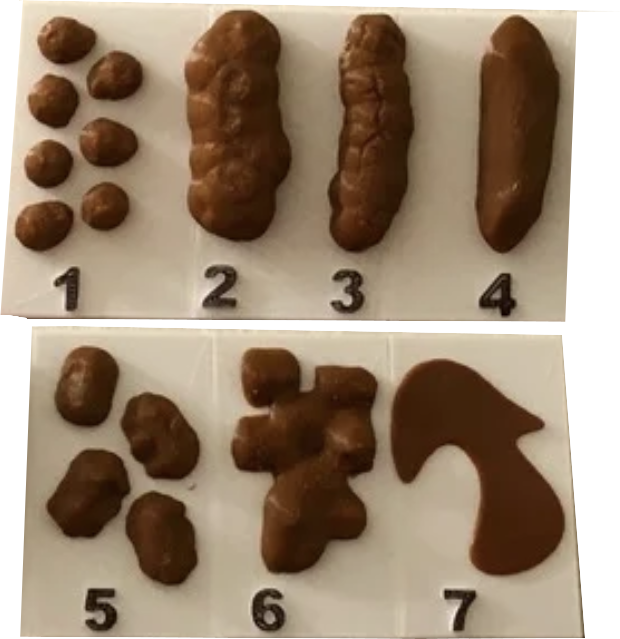
Persistent changes in your Bristol type — especially drifts toward either extreme — are one of the earliest and most reliable external signals that your microbiome is under stress. Tracking these changes consistently over time allows you to correlate them with specific dietary changes, medication courses, stressful life events, or travel.
Excess Gas and Bloating as Fermentation Signals
Gas is a normal byproduct of bacterial fermentation of dietary fiber — the bacteria in your colon produce hydrogen, methane, and carbon dioxide as metabolic byproducts. A healthy microbiome ferments fiber efficiently and produces gas at a rate your gut handles comfortably. Dysbiosis disrupts this balance. If you suddenly develop excessive bloating after eating foods you've always tolerated well, it often signals a disruption in the bacterial populations responsible for that fermentation. Small intestinal bacterial overgrowth (SIBO) — a condition where bacteria migrate from the colon into the typically low-bacteria small intestine — causes particularly severe bloating that begins within 30 to 90 minutes of eating carbohydrates.
Odor and Bile Acid Metabolism
Stool odor is largely determined by bacterial metabolic activity. Particularly foul-smelling stools can indicate elevated bacterial fermentation of sulfur-containing compounds, disrupted bile acid metabolism by gut bacteria, or the presence of undigested fat (steatorrhea) — all of which may signal microbiome imbalance or malabsorption issues worth investigating.
Tracking Patterns With an App
The challenge with microbiome monitoring through stool observation is that single data points are rarely meaningful — you need patterns over time. This is exactly where a consistent tracking habit pays off. By logging your Bristol type, color, frequency, and accompanying symptoms daily in an app like Happy Poop, you build a personalized baseline. When your microbiome is disrupted — by antibiotics, a new medication, a significant dietary shift, or illness — deviations from that baseline become immediately visible rather than lost in memory. That data becomes genuinely useful for correlation analysis: did the switch to a new diet change your Bristol type? Did the antibiotic course produce two weeks of unusual stool patterns? Did probiotics make a measurable difference?
Happy Poop lets you log Bristol type, color, quantity, custom traits, and notes for each entry — and then visualize the patterns through charts and correlation graphs.






Diet Strategies to Support a Healthy Microbiome
The microbiome responds to dietary changes remarkably quickly — studies have shown measurable shifts in bacterial composition within 24 to 48 hours of a significant dietary change. That also means dietary improvements produce rapid results.
Prioritize Dietary Fiber Diversity
Different bacterial species ferment different types of fiber, so microbial diversity requires dietary diversity. The goal isn't just to eat more fiber (though most people in Western countries consume far below the recommended 25–38 grams per day) — it's to eat fiber from many different sources. Different vegetables, legumes, whole grains, nuts, and seeds each feed distinct microbial populations. Aim to eat as many different plant species per week as practicable. Even small additions — a tablespoon of flaxseed, a new vegetable variety, a handful of walnuts — contribute meaningfully to microbial diversity over time.
Fermented Foods: Direct Microbial Delivery
Fermented foods — yogurt with live cultures, kefir, sauerkraut, kimchi, miso, tempeh, and traditionally made pickles — deliver live beneficial bacteria directly to the gut. A 2021 randomized controlled trial published in Cell (Wastyk et al.) directly compared a high-fiber diet to a high-fermented-food diet in healthy adults over 17 weeks. The fermented food group showed a significant and consistent increase in microbiome diversity — a universally positive marker of gut health — while the high-fiber group showed more variable results that depended on the participants' pre-existing microbiome composition. The researchers concluded that fermented foods may be a more universally reliable way to improve microbiome diversity than fiber alone, particularly in people with initially low diversity.

Polyphenols: The Prebiotic Bonus in Plant Foods
Polyphenols are plant compounds (found abundantly in berries, tea, coffee, dark chocolate, olive oil, and red wine) that most people think of as antioxidants. But a large portion of dietary polyphenols are not absorbed in the small intestine — they travel to the colon, where they act as substrates for beneficial bacteria. Several well-studied polyphenol-metabolizing bacteria produce anti-inflammatory metabolites from these compounds. Diets rich in diverse polyphenol sources consistently correlate with greater microbiome diversity and lower inflammatory markers.
Foods to Minimize
The evidence against ultra-processed foods and their impact on the microbiome has become increasingly robust. Emulsifiers (carboxymethylcellulose and polysorbate 80) — used ubiquitously in packaged foods to improve texture and extend shelf life — have been shown in animal studies to degrade the protective mucus layer of the gut and promote low-grade intestinal inflammation. Artificial sweeteners (saccharin, sucralose, and aspartame) have been shown in human trials to significantly alter gut microbial composition and impair glucose tolerance. Excess dietary sugar selectively feeds pathogenic bacteria, particularly Clostridioides difficile and certain Proteobacteria species.
Probiotics and Prebiotics: What the Evidence Actually Shows
The market for probiotic supplements has grown into a multi-billion-dollar industry, fueled by a genuine scientific interest in the microbiome's role in health. But the evidence for commercial probiotic supplements is considerably more nuanced than their marketing suggests.
When Probiotics Are Well-Supported
The clinical evidence for probiotics is strongest in specific, well-defined contexts:
- Antibiotic-associated diarrhea: Taking probiotics concurrently with (and for a week or two after) antibiotics significantly reduces the risk of antibiotic-associated diarrhea. Lactobacillus rhamnosus GG and Saccharomyces boulardii have the most robust evidence base here.
- Infectious diarrhea (rotavirus in children): Several probiotic strains have good evidence for reducing the duration of acute infectious diarrhea in children.
- Irritable Bowel Syndrome: Meta-analyses show that certain probiotic strains (particularly multi-strain formulations) modestly but meaningfully reduce IBS symptom severity and improve stool consistency in some patients.
- Clostridioides difficile recurrence: Specific strains, particularly S. boulardii, show meaningful reduction in recurrence rates for C. diff infections when used adjunctively with standard antibiotic treatment.
The Evidence Gap for General "Gut Health"
For healthy adults without a specific GI condition, the evidence that commercial probiotic supplements meaningfully or durably improve microbiome composition is much weaker than often implied. A landmark 2018 study from the Weizmann Institute found that after antibiotic treatment, participants who took standard commercial probiotics actually showed slower microbiome recovery compared to those who simply allowed their microbiome to recover naturally. The probiotic strains colonized the gut abundantly but appeared to delay, rather than facilitate, the return of the native microbial community.
The practical implication: whole-food sources of probiotics (fermented foods) and prebiotics (dietary fiber) are a more reliable long-term strategy than supplements for the general population. For specific conditions or circumstances (post-antibiotics, IBS, C. diff recovery), targeted probiotic supplementation with strain-specific evidence is worth discussing with a healthcare provider.
Signs Your Gut Microbiome May Be Out of Balance
Dysbiosis rarely announces itself dramatically. Instead, it tends to show up as a cluster of seemingly unrelated symptoms that accumulate over time and are easy to attribute to other causes. The following patterns — particularly when they appear together or following a known microbiome disruptor like an antibiotic course, a period of severe stress, or a major dietary shift — are worth paying attention to:
- A persistent change in stool consistency or frequency that has no obvious dietary explanation and lasts more than two to three weeks.
- New or worsening bloating, particularly after eating foods you've long tolerated without issue.
- Increased urgency or frequency, especially if accompanied by gas and cramping.
- Increased susceptibility to infections, particularly respiratory illnesses — often a sign that the immune-training functions of the microbiome are compromised.
- Unexplained fatigue, brain fog, or low mood, particularly if temporally associated with GI symptoms.
- New food intolerances or sensitivities, especially to foods that were previously well-tolerated.
- Skin conditions including eczema, rosacea, or acne that flare alongside GI changes — the gut-skin axis is an active area of research.
Identifying these patterns requires a baseline. If you have been consistently tracking your bowel habits — frequency, consistency, color, and associated symptoms — in an app like Happy Poop, these warning signals become data points rather than vague impressions. A log that shows a clear shift from Bristol Type 4 to Type 6 starting three days after beginning a new medication is a far more clinically useful observation than "I've been feeling off lately."
Emerging Science: Fecal Microbiota Transplantation
Fecal Microbiota Transplantation (FMT) is one of the most dramatic demonstrations of the microbiome's clinical importance. The procedure — transferring stool from a carefully screened, healthy donor into the colon of a recipient — reconstitutes the recipient's gut microbiome with the donor's far more rapidly than any dietary intervention or probiotic supplement can achieve.
FMT currently has its most compelling evidence base in the treatment of recurrent Clostridioides difficile infection, where it achieves cure rates above 90 percent — dramatically outperforming even the most targeted antibiotic therapies. In 2022, the FDA approved Rebyota, the first FDA-approved FMT-derived therapy for recurrent C. diff, marking the formalization of microbiome-based medicine.
Clinical trials are ongoing for FMT in the treatment of ulcerative colitis, Crohn's disease, obesity, type 2 diabetes, autism spectrum disorder, and Parkinson's disease. The results are mixed and early, but the trajectory of the science is clear: the gut microbiome will become a routine therapeutic target in medicine over the coming decades, and the tools we develop now to monitor and understand it will matter enormously.
Sources & Medical References:
- Wastyk et al. (2021) — Gut-microbiota-targeted diets modulate human immune status. Cell.
- Suez et al. (2018) — Post-Antibiotic Gut Mucosal Microbiome Reconstitution Is Impaired by Probiotics. Cell.
- World Health Organization — Antimicrobial Resistance.
- Sender et al. (2016) — Revised Estimates for the Number of Human and Bacteria Cells in the Body. Cell.
- Mayo Clinic — Probiotics and Digestive Health.