The Stress-Gut Connection: How Anxiety and Chronic Stress Disrupt Digestion
That "gut feeling" is not just a metaphor. Your intestines and your brain speak in a constant, bidirectional dialogue — and when your mind is under siege, your bowels are rarely far behind.
Two Nervous Systems, One Conversation
Most people think of the brain as a single, centralized command center. In reality, the human body operates two distinct nervous systems with roughly comparable complexity. The central nervous system (CNS) — your brain and spinal cord — handles conscious thought, voluntary movement, and higher cognitive functions. The enteric nervous system (ENS) — a mesh of approximately 500 million neurons embedded in the walls of your gastrointestinal tract — governs the entire digestive process largely autonomously.
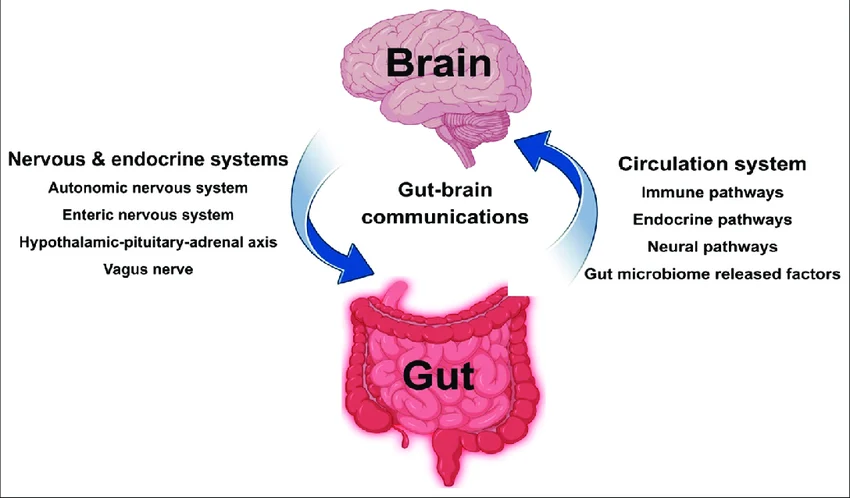
The ENS is often called the "second brain," and the title is apt. It can operate completely independently of the CNS, coordinating peristalsis (the muscular contractions that move food through your gut), regulating digestive enzyme secretion, and managing mucosal blood flow without any input from your brain at all. But it does not operate in isolation. The ENS and CNS communicate continuously through the vagus nerve, the primary highway of the gut-brain axis, as well as through the immune system, the endocrine system, and the gut microbiome.
This bidirectional communication is the physiological basis of the stress-gut connection. When your brain activates the stress response, it sends signals down to the gut that fundamentally alter how it functions. And when the gut is inflamed, dysbiotic, or under chemical stress, it sends signals up to the brain that worsen anxiety and mood. The traffic flows both ways.
The Fight-or-Flight Response and Your Digestive System
The stress response — the fight-or-flight cascade triggered by your sympathetic nervous system — is an ancient survival mechanism designed for acute physical threats. When your brain perceives danger, the hypothalamus activates the sympathetic nervous system, which releases adrenaline (epinephrine) and triggers the HPA (hypothalamic-pituitary-adrenal) axis to flood your body with cortisol. Together, these hormones produce the rapid physiological changes needed to fight or flee: increased heart rate, elevated blood pressure, dilated pupils, and redirected blood flow to the muscles.
For the digestive system, the stress response is explicitly suppressive. In an evolutionary context, digesting your lunch is not a priority when you're being chased by a predator. The stress hormones therefore orchestrate the following changes in your GI tract:
- Reduced gastric acid and digestive enzyme secretion: Digestion slows or halts in the stomach and small intestine.
- Altered gut motility: The effects on motility are paradoxical and vary by region of the gut. The stomach and small intestine typically slow down, while the colon often accelerates — producing the urgent need to defecate that many people experience before stressful events. This "stress diarrhea" is a real physiological phenomenon, not a psychosomatic invention.
- Increased intestinal permeability ("leaky gut"): Corticotropin-releasing factor (CRF), a stress hormone released by the hypothalamus, directly increases the permeability of the intestinal barrier by disrupting the tight junctions between intestinal epithelial cells. This allows bacterial products (such as lipopolysaccharides from gram-negative bacteria) to leak into the bloodstream, triggering systemic low-grade inflammation.
- Altered gut microbiome composition: Stress hormones directly affect the intestinal environment — pH, secretory IgA levels, mucus production — in ways that selectively disadvantage beneficial bacteria and may promote the proliferation of pathogenic species.
- Heightened visceral pain sensitivity: CRF also directly increases the sensitivity of pain receptors in the gut, making the same amount of intestinal gas or cramping feel significantly more painful during stress than at rest.
Acute Stress vs. Chronic Stress: Different Mechanisms, Different Damage
The physiological effects of a single stressful event — an exam, a confrontation, a public speaking engagement — are transient. Gut function typically normalizes once the stressor has passed and the cortisol response winds down. This is why some people experience pre-performance diarrhea before a job interview but have perfectly normal digestion the rest of the time.
Chronic stress is fundamentally different in its effects. When the stress response is activated repeatedly or continuously over weeks, months, or years — as in chronic work stress, relationship conflict, financial anxiety, caregiver burden, or chronic illness — the physiological consequences accumulate and can become structural:
Prolonged Intestinal Permeability
Persistent low-level CRF release maintains a chronically elevated intestinal permeability. Ongoing translocation of bacterial products into the bloodstream maintains a state of systemic low-grade inflammation — measurable as elevated C-reactive protein and pro-inflammatory cytokines like TNF-α and IL-6. This chronic inflammatory state contributes to a wide range of conditions, from metabolic syndrome to depression.
Microbiome Disruption
Animal studies and, increasingly, human research demonstrate that chronic psychological stress produces lasting changes in gut microbiome composition. Studies in rodents exposed to chronic social defeat stress (a validated model of human depression and anxiety) show consistent reductions in Lactobacillus abundance and increases in potentially pathogenic Proteobacteria. Human studies on medical students during exam periods, military personnel during training, and people experiencing relationship loss show similar patterns of reduced microbiome diversity and altered bacterial profiles that persist beyond the acute stressor. This microbiome disruption then feeds back on the brain through the gut-brain axis, amplifying anxiety and lowering stress resilience — a vicious cycle that can be very difficult to interrupt without addressing both the psychological and physiological components.
Central Sensitization
Chronic stress also produces changes in how the central nervous system processes pain signals. Through a mechanism called central sensitization, the pain pathways in the spinal cord and brain become chronically upregulated, lowering the threshold for pain perception throughout the body — including the gut. This is thought to be a major driver of the visceral hypersensitivity seen in IBS, which disproportionately affects people with histories of chronic stress and psychological trauma.

How Stress Worsens Specific Digestive Conditions
While stress affects gut function in virtually everyone to some degree, its effects are dramatically amplified in people with pre-existing GI conditions.
Irritable Bowel Syndrome (IBS)
The relationship between stress and IBS is among the most thoroughly studied in gastroenterology. IBS patients consistently show measurably elevated psychological distress compared to healthy controls, and psychological stressors are the most commonly reported triggers for IBS flares. Notably, the causal arrows point in both directions: stress worsens IBS symptoms, and the unpredictability and social limitation of IBS worsen psychological distress. The gut-brain axis in IBS appears to operate at a permanently elevated gain — normal amounts of intestinal gas, normal peristaltic activity, and normal stress hormone levels that healthy individuals barely notice can register as severe, cramping pain in an IBS patient.
Clinical trials demonstrate that psychological interventions — cognitive behavioral therapy (CBT), gut-directed hypnotherapy, and mindfulness-based stress reduction (MBSR) — produce significant and sustained reductions in IBS symptom severity that are comparable to pharmacological treatments. The evidence is strong enough that major GI society guidelines (ACG, BSG) now recommend psychological therapies as a primary treatment option for IBS.
Inflammatory Bowel Disease (IBD)
The relationship between stress and IBD (Crohn's disease and ulcerative colitis) is more complex because IBD involves a measurable, objective inflammatory process rather than purely functional changes. For many years, IBD was considered a "real" (organic) disease in contrast to the "functional" (stress-influenced) nature of IBS, and psychological factors were dismissed as secondary. More recent research challenges this distinction significantly.
Several large prospective cohort studies have found that high psychological stress significantly increases the risk of IBD flare, even after controlling for medication adherence and other confounders. A 2020 meta-analysis in Gut found that people with IBD who reported high levels of perceived stress were substantially more likely to experience a disease flare in the subsequent weeks. The mechanisms are thought to involve stress-mediated increases in intestinal permeability, altered mucosal immune function, and changes in gut microbiome composition — all of which can tip the balance in a disease that is already perpetuating a cycle of mucosal inflammation.
Functional Dyspepsia
Functional dyspepsia — upper abdominal pain, bloating, nausea, and early satiety without a structural explanation (like an ulcer) — is another condition with profound stress-gut links. The stomach and upper GI tract are particularly sensitive to psychological distress: nausea and appetite suppression during stress are almost universally experienced, even by otherwise healthy individuals. In people with functional dyspepsia, stress-mediated changes in gastric acid secretion, gastric motility, and visceral sensitivity combine to produce severe and debilitating upper GI symptoms that often do not respond well to purely pharmaceutical management.
Why Tracking Mood Alongside Digestive Symptoms Is Powerful
Here lies one of the most underutilized insights in gut health management: the gut-brain axis means that your mood and stress data is your digestive health data. The two are not separate silos to be tracked independently — they are part of a single, integrated physiological system.
The challenge is that the feedback loop between stress and gut symptoms is often delayed and indirect. You might have a high-stress week and not experience a digestive flare until four or five days later, once the cortisol load, microbiome disruption, and increased intestinal permeability have had time to accumulate into symptomatic change. Without timestamped data, that correlation is nearly impossible to identify retrospectively.
What to Track
A meaningful stress-gut correlation diary should capture:
- Digestive data: Daily stool type (Bristol Scale), frequency, urgency, color, and any accompanying pain. These are the downstream variables.
- Mood and stress data: Daily subjective stress level (a simple 1–5 or 1–10 scale), sleep quality, and significant stressful events or days. These are the upstream drivers.
- Timing: The exact time of both food consumption and symptoms, and the date of significant stressful events.
Happy Poop is designed precisely for this kind of integrated tracking. Within each log entry, you can tag your mood, mark custom habits (including stress-related ones), and add text notes about the context of the day. The Dashboard's correlation chart then lets you overlay poop, pee, and habit data on a single timeline — making the stress-gut relationship visible and measurable rather than a vague suspicion. You can export this data as a PDF to share with your gastroenterologist or therapist.






Practical Strategies for Breaking the Stress-Gut Cycle
Addressing the stress-gut axis requires working on both the psychological and physiological sides of the loop simultaneously. Treating only the gut symptoms without addressing their stress drivers produces limited and unstable results; conversely, stress management alone may be insufficient when the gut itself has become a chronically inflammatory and sensitized system.
Mind-Body Interventions With Evidence
- Gut-directed hypnotherapy: Has the strongest evidence base for IBS, with multiple RCTs showing 50–70% symptom improvement rates. It involves guided relaxation and visualization specifically focused on normalizing gut function and reducing visceral hypersensitivity. Sessions are typically weekly for 6–12 weeks, and effects are durable.
- Cognitive behavioral therapy (CBT): Effective for both the psychological distress and GI symptoms of IBS and functional dyspepsia, particularly in addressing the catastrophizing thoughts and avoidance behaviors that amplify symptom burden.
- Mindfulness-based stress reduction (MBSR): 8-week standardized program with good evidence for reducing perceived stress and improving quality of life in IBS patients.
- Diaphragmatic breathing: Slow, deep breathing activates the parasympathetic nervous system (the "rest and digest" counterpart to the fight-or-flight response) and stimulates the vagus nerve, producing measurable reductions in cortisol levels and gut motility dysregulation. Even 5 minutes of slow breathing before meals can improve gastric emptying and reduce post-meal symptoms in stress-sensitive individuals.
Lifestyle Factors That Modulate the Axis
- Regular aerobic exercise: Consistently reduces cortisol levels, improves gut motility, increases gut microbiome diversity, and has been shown in RCTs to improve IBS symptoms independent of any dietary changes.
- Sleep quality: Sleep is the period during which cortisol levels are supposed to fall to baseline. Chronic sleep deprivation maintains elevated cortisol, compounds intestinal permeability, and accelerates microbiome dysbiosis. Prioritizing 7–9 hours of quality sleep is a legitimate gut health intervention.
- Social connection: Loneliness activates the same HPA stress response as physical threats. Strong social support is one of the most robust predictors of lower chronic stress load and better health outcomes across virtually all organ systems, including the GI tract.
Sources & Medical References:
- Bernstein et al. (2020) — Stress and Inflammatory Bowel Disease. Gut.
- Mayo Clinic — Irritable Bowel Syndrome: Symptoms and Causes.
- Mayer et al. (2018) — Gut/Brain Axis and the Microbiota. Journal of Clinical Investigation.
- NHS UK — IBS Causes: The Gut-Brain Axis.
- American College of Gastroenterology — IBS Patient Information.