Understanding Diarrhea: Pathophysiology, Causes, and Clinical Management
A deep dive into the biological mechanisms of bowel hypermotility, malabsorption, and effective rehydration strategies.
The Physiology of Normal Digestion
Let's start with just how efficient your gut normally is — because the numbers are genuinely impressive. Every day, the average human gut processes roughly 9 liters of fluid — that's ingested food and water combined with salivary, gastric, biliary, and pancreatic secretions. The small intestine absorbs the lion's share of this (about 7.5 liters) along with vital nutrients, and the remaining 1.5 liters passes to the large intestine (colon), which absorbs nearly all remaining water and salts. The end result? A healthy person excretes only about 150 to 200 milliliters of fluid in solid feces per day. Diarrhea happens when this finely tuned system breaks down.
The Mechanisms of Diarrhea
Clinically, diarrhea is defined as the passage of three or more loose or liquid stools per day, or more frequently than is normal for you. It's not just a symptom of "eating something bad" — it's a specific biological response that falls into two core pathophysiological categories: osmotic and secretory.
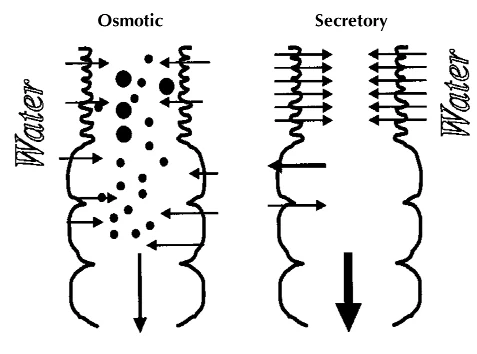
Osmotic diarrhea occurs when unabsorbable, water-soluble solutes stay in the bowel and pull water into the colon rather than letting it be absorbed — you see this clearly in lactose intolerance, where undigested milk sugars act like a sponge in the intestines. Secretory diarrhea is a different beast: here, the intestinal wall actively pumps large volumes of electrolytes and water into the bowel lumen, overwhelming the colon's ability to keep up. Cholera and certain strains of E. coli are the classic examples.
Acute vs. Chronic Diarrhea: Common Causes
Duration matters a lot when it comes to diarrhea. Acute diarrhea comes on suddenly and usually clears up within 5 to 10 days. Chronic diarrhea, on the other hand, persists for more than 4 weeks — and at that point, you need medical investigation to rule out something more serious.
Infectious Gastroenteritis (Acute)
Intestinal infections are the leading cause of acute diarrhea worldwide, and infants and young children are the most vulnerable demographic. Viral pathogens — particularly norovirus and rotavirus — are highly contagious and frequently spark localized outbreaks. Bacterial food poisoning, often caused by Salmonella, Campylobacter, or Escherichia coli, typically comes from contaminated water, undercooked poultry, or unpasteurized dairy.
Pharmacological Triggers and The Gut Microbiome
Medications are frequent culprits of bowel dysregulation. Antibiotics indiscriminately wipe out both pathogenic and beneficial gut bacteria, leading to what's known as antibiotic-associated diarrhea. Certain blood pressure medications, magnesium-containing antacids, and excessive laxative use can also push bowel contents through too quickly for adequate absorption.
Systemic and Functional Disorders (Chronic)
When diarrhea turns chronic, it's usually a signal that something bigger is going on — a systemic or autoimmune condition driving the symptoms. Irritable Bowel Syndrome (IBS) frequently presents with diarrhea (IBS-D), driven by visceral hypersensitivity and hypermotility. Endocrine disorders like hyperthyroidism can rev up the body's metabolic rate and push waste through the digestive tract before adequate absorption occurs. Autoimmune conditions such as Celiac disease or Inflammatory Bowel Disease (Crohn's and Ulcerative Colitis) go further still — they physically destroy the mucosal lining, leaving the gut unable to absorb nutrients or fluids.
Treatment, Prevention, and Management
The real clinical danger of diarrhea isn't the loose stools themselves — it's the dehydration and electrolyte imbalance that follow. Losing significant amounts of water, sodium, potassium, and bicarbonate can trigger severe cardiovascular and neurological complications, and this risk is especially acute in children and elderly adults.
Oral Rehydration Therapy (ORT)
ORT is the cornerstone of diarrhea management, and it's deceptively simple. The treatment involves a precise ratio of water, glucose, and sodium. The glucose isn't there for energy — it activates sodium-glucose co-transporters in the intestinal lining, essentially tricking the gut into absorbing water even while it's actively secreting fluid. That mechanism is why ORT is considered one of the most significant medical advances of the 20th century, dramatically cutting the need for hospitalization across the globe.
Nutritional and Supplemental Interventions
For a long time, patients were told to "starve a fever" and hold off on eating during a severe bout. Modern gastroenterology strongly opposes this. Fasting for more than 4 hours actually makes things worse by degrading the intestinal lining further. Normal feeding should resume as soon as basic rehydration is achieved. The WHO also strongly recommends supplemental zinc therapy for children — it's been shown to reduce the severity of the episode and help prevent future occurrences for up to three months.
Traveller's Diarrhea: The World's Most Common Travel Illness
Each year, between 30 and 70 percent of international travellers are affected by traveller's diarrhea (TD) — making it the single most frequent travel-related illness globally. The risk is not uniform: travellers from high-income countries visiting South Asia, Southeast Asia, Central America, and sub-Saharan Africa face the highest incidence, with rates as high as 40–60% on trips lasting two weeks or more.
The dominant pathogens are bacterial, not viral. Enterotoxigenic Escherichia coli (ETEC) accounts for roughly 30–50% of cases. ETEC produces heat-labile and heat-stable toxins that trigger the intestinal cells lining the gut wall to massively overproduce cyclic AMP — the same second-messenger pathway that cholera toxin exploits, albeit far less severely. Campylobacter jejuni, Salmonella species, and Shigella are the other major bacterial culprits.
A significant minority of TD cases are protozoal — particularly Giardia lamblia (giardiasis) and, in certain tropical regions, Cryptosporidium. These are worth knowing about because they do not respond to standard antibiotics and can persist for weeks or months if untreated.
Prevention Strategies That Actually Work
The old rule "boil it, cook it, peel it, or forget it" remains the most effective preventive strategy. Beyond food safety, bismuth subsalicylate (Pepto-Bismol) taken prophylactically has shown 65% protection in controlled trials, though it requires four doses daily. Probiotic prophylaxis shows inconsistent evidence across trials — some Lactobacillus strains show modest benefit in specific populations, but no universal recommendation exists.
Antibiotic prophylaxis with rifaximin is reserved for high-risk travellers (immunocompromised, underlying IBD, critical business travel) due to concerns about antibiotic resistance. For most people, having azithromycin or rifaximin available to treat rather than prevent is the preferred approach: most episodes resolve within 3–5 days with treatment, compared to 3–7 days without.
Antibiotic-Associated Diarrhea and Clostridioides difficile
Antibiotics are the most frequent pharmacological cause of acute diarrhea outside of infectious gastroenteritis — affecting up to 30% of patients receiving them, depending on the class. Broad-spectrum antibiotics (fluoroquinolones, cephalosporins, clindamycin) are the highest-risk agents because of how aggressively they deplete commensal bacteria.
The most clinically significant consequence of antibiotic-induced microbiome disruption is Clostridioides difficile infection (CDI). C. difficile is a spore-forming bacterium that ordinarily exists in small, suppressed populations in the healthy gut. When broad-spectrum antibiotics clear competing species, it proliferates rapidly and produces two toxins (Toxin A and Toxin B) that destroy intestinal epithelial cells, triggering profuse watery diarrhea, fever, and in severe cases, pseudomembranous colitis. CDI hospitalises over 400,000 people annually in the United States alone.
The critical clinical lesson here: never self-treat suspected CDI diarrhea with over-the-counter antidiarrheal agents like loperamide. Slowing gut motility when C. difficile toxin is present risks toxic megacolon — a life-threatening complication requiring emergency surgery. Anyone developing watery diarrhea on or within 8 weeks of completing a course of antibiotics should seek medical evaluation.
The Chronic Diarrhea Investigation: A Systematic Approach
When diarrhea persists beyond four weeks, the diagnostic approach shifts from "treat and wait" to active investigation. The conditions most frequently uncovered in a chronic diarrhea workup fall into three broad categories.
Inflammatory bowel disease — Crohn's disease and ulcerative colitis — typically presents with bloody or mucoid diarrhea, abdominal cramping, and constitutional symptoms like weight loss and fatigue. Endoscopy and biopsy are required for diagnosis. Microscopic colitis is a lesser-known but underdiagnosed condition predominantly affecting middle-aged women that produces chronic watery diarrhea with an entirely normal-looking colon on endoscopy — the inflammation is only visible under a microscope. It accounts for roughly 10–15% of chronic diarrhea cases in adults over 50.
Malabsorptive conditions — including celiac disease, exocrine pancreatic insufficiency, and bile acid malabsorption — produce diarrhea through different mechanisms. In celiac disease, immune-mediated villous atrophy reduces absorptive surface area. In bile acid malabsorption, excess bile acids spilling into the colon have a powerful secretory laxative effect. Both are frequently misdiagnosed as IBS for years.
What a Symptom Log Can Reveal
One of the most useful things a patient can bring to a gastroenterology appointment is a documented symptom log — not just a rough recollection, but specific data: how many bowel movements per day, their Bristol type, whether they're associated with urgency, whether blood or mucus is present, and any temporal patterns (worse in the morning? worse after certain meals? improving on weekends?). These details can immediately point an experienced gastroenterologist toward a specific diagnosis — or efficiently rule out broad categories.
Tracking Diarrhea Episodes with Happy Poop
Managing diarrhea — whether occasional acute bouts or a chronic condition under medical supervision — is substantially easier when your data is organized, timestamped, and exportable. Happy Poop is a digestive health tracking app designed specifically for this purpose.
During a diarrheal episode, each entry logs the Bristol type (usually Types 6 or 7), the approximate quantity, time of day, and any relevant traits — urgency, cramping, blood, or mucus. Over a week of logging, a chart immediately reveals how many times per day the episode is occurring and whether it's resolving. When sharing this data with a gastroenterologist, the PDF export generates a clean timeline that replaces the inevitable "I can't quite remember how many times a day it was" conversation.
For users managing chronic GI conditions, the multi-data overlay chart shows how specific custom habits — food items, stress levels, medications — correlate with loose stool frequency over weeks. This is how you move from "something I ate triggers this" to "I now know which specific foods trigger it and exactly how quickly."
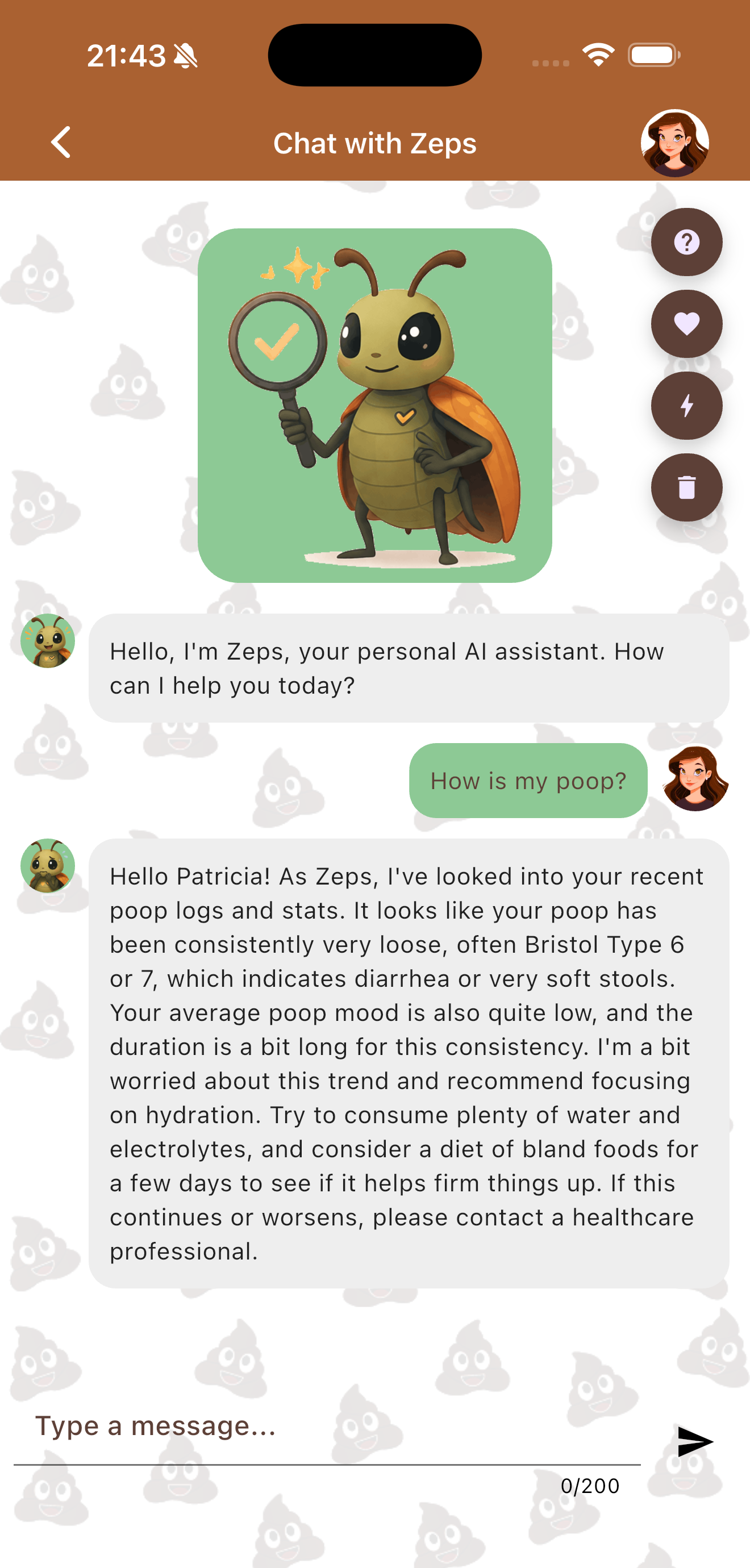
And when you want personalized insights from your own data, the Zeps AI assistant (accessible via the chat button in the Dashboard) can analyse your logged history and give specific, data-grounded answers: which days tend to have the most loose stools, whether your recent Bristol distribution suggests your gut is recovering normally, and what patterns in your log are worth discussing with your doctor.

Download Happy Poop for Android, iOS, or the web:






Sources & Medical References: