Irritable Bowel Syndrome (IBS): Navigating a Functional Disorder
Understanding the Gut-Brain axis, diagnostic subtypes, and evidence-based lifestyle management.
Beyond "Spastic Colon": What is IBS?
IBS goes by a lot of names — spastic colon, nervous bowel, mucous colitis — but those older labels don't really capture what's happening. It's a functional gastrointestinal disorder, and that word "functional" is worth unpacking: blood tests, biopsies, and colonoscopies all come back looking perfectly normal. No inflammation, no tumors, no structural damage. The problem isn't what your gut looks like — it's how it behaves and communicates with the central nervous system.
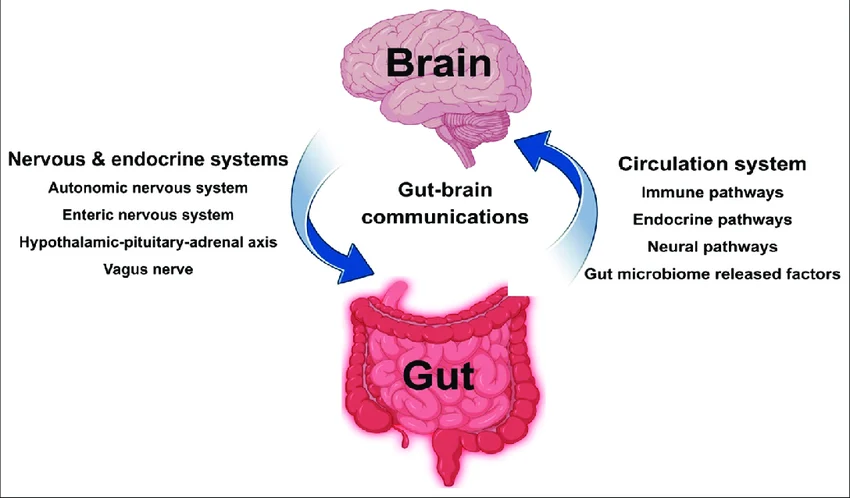
Today's medical consensus views IBS as a disorder of the Gut-Brain Axis. Your enteric nervous system — the dense web of neurons governing your GI tract — runs on hyperdrive. The phenomenon is called visceral hypersensitivity: normal amounts of gas or ordinary digestive contractions that most people never even notice can register in an IBS patient's brain as severe, cramping pain. The signal is real. The gut is just amplifying it far beyond what's warranted.
The Four Clinical Subtypes
IBS doesn't look the same in everyone — it really can't, given how varied the symptoms are. That's why the Rome IV diagnostic criteria divides the disorder into four distinct subtypes, based on your predominant stool pattern, typically assessed using the Bristol Stool Scale.
- IBS-D (Diarrhea-Predominant): The digestive system moves too rapidly. Stools are frequently loose, watery (Bristol Types 6 & 7), and accompanied by a sudden, intense urgency to defecate.
- IBS-C (Constipation-Predominant): The digestive system moves too slowly. Stools are hard, lumpy (Bristol Types 1 & 2), and difficult to pass, often leading to severe bloating and feelings of incomplete evacuation.
- IBS-M (Mixed/Alternating): The patient experiences wild swings in bowel habits, alternating between severe constipation and sudden diarrhea within the same month or even the same week.
- IBS-U (Unclassified): Symptoms of pain and discomfort are present, but bowel habits do not neatly fit into the D, C, or M categories.
Demographics and The Gender Divide
The numbers here are striking: women are two to three times more likely to be diagnosed with IBS than men, and up to five times more likely to seek specialized GI care. Researchers point to a mix of biological and psychosocial factors. On the biological side, hormonal shifts are a major driver — many women with IBS notice a significant worsening of symptoms at specific points in their menstrual cycle.
On the psychosocial side, there's a well-documented link between severe psychological trauma — particularly a history of sexual abuse — and the later development of functional GI disorders. Chronic stress permanently recalibrates the sensitivity of the gut-brain axis, which helps explain why marginalized populations face a disproportionately higher risk.
Red Flag Symptoms: When It Isn't IBS
IBS is a diagnosis of exclusion — meaning doctors need to rule out more serious conditions like Inflammatory Bowel Disease (Crohn's) and colorectal cancer before landing on an IBS diagnosis. Seek immediate medical attention if you experience any of these "red flag" symptoms, because they are not caused by IBS:
- Unintentional and rapid weight loss.
- Nocturnal diarrhea that wakes you from deep sleep.
- Rectal bleeding or stools that appear black and tarry.
- Unexplained iron-deficiency anemia or persistent vomiting.
Management and Relief Strategies
There's no pharmaceutical cure for IBS — but that doesn't mean you're stuck with it. With the right dietary and lifestyle changes, it's genuinely manageable for most people.
- The Low-FODMAP Diet: A medically supervised elimination diet that temporarily restricts Fermentable Oligosaccharides, Disaccharides, Monosaccharides, and Polyols—specific carbohydrates that the small intestine struggles to absorb, leading to rapid fermentation and gas production in the colon.
- Data Tracking: Keeping a meticulous daily diary of meal times, specific ingredients, psychological stress levels, and resulting bowel movements is the most effective way to identify personal trigger foods.
- Psychological Interventions: Because of the gut-brain connection, therapies such as gut-directed hypnotherapy, cognitive behavioral therapy (CBT), and even prescribed low-dose antidepressants are frequently used to dull the visceral pain signals traveling from the gut to the brain.
Dietary Management: For many people with IBS, standard dietary advice barely scratches the surface. Clinical protocols like the Low-FODMAP Diet can be genuinely life-changing. The most effective way to figure out which specific foods trigger your symptoms? Use Happy Poop to keep an accurate daily food and symptom diary — it connects the dots so you don't have to guess.
Rome IV Diagnostic Criteria
IBS is not diagnosed just because someone feels bloated, irregular, or sensitive after meals. The modern standard is the Rome IV criteria, which were designed to separate a true functional bowel disorder from short-term indigestion, self-diagnosed “food intolerance,” or symptoms caused by inflammatory disease. Under Rome IV, a person must have recurrent abdominal pain, on average, at least one day per week during the last three months, and that symptom pattern must have started at least six months before diagnosis. That timing matters. IBS is a chronic syndrome with a recurring pattern; it is not a diagnosis for a bad week after food poisoning or a month of stress-related stomach upset.
The abdominal pain must also be associated with at least two of three features: it is related to defecation, associated with a change in stool frequency, or associated with a change in stool form. “Related to defecation” does not necessarily mean the pain improves after a bowel movement. Some people feel partial relief, some feel worse during an attack, and some experience cramping that peaks immediately before stool passage. The key point is that the pain and the bowel habit are linked. That distinction helps clinicians separate IBS from isolated constipation, isolated diarrhea, peptic disorders, or purely gynecologic and urologic pain syndromes.
Once the diagnosis is established, the next step is subtyping. Rome IV uses the Bristol Stool Scale to categorize IBS by stool pattern, but it looks specifically at abnormal bowel movements. If more than 25% of symptomatic stools are hard or lumpy and fewer than 25% are loose, the patient is classified as IBS-C. If the reverse is true, that is IBS-D. If both hard and loose stools occur more than 25% of the time, the subtype is IBS-M. If neither threshold is reached, the condition is labeled IBS-U. In practice, that usually maps like this:
- IBS-C: Mostly Bristol 1-2 stools, often with straining, bloating, and incomplete evacuation.
- IBS-D: Mostly Bristol 6-7 stools, often with urgency, post-meal rushing to the bathroom, and fear of accidents.
- IBS-M: A mix of Bristol 1-2 and 6-7, sometimes alternating over days and sometimes within the same week.
- IBS-U: Pain and bowel dysfunction are present, but the pattern does not consistently fit the other three groups.
This classification is much more than academic labeling. A person with IBS-C may benefit from soluble fiber, osmotic support, or prescription secretagogues such as linaclotide or lubiprostone. A person with IBS-D may need a completely different strategy centered on trigger foods, bile acid assessment, antidiarrheal use, or rifaximin. IBS-M requires even more nuance because an intervention that helps constipation may worsen diarrhea a week later. That is why accurate stool tracking matters: the subtype often shifts over time, and treatment should shift with it.
Why the Bristol Scale matters: In IBS care, stool shape is not a trivial detail. It is one of the main tools doctors use to classify the disorder, select treatment, and monitor whether a patient is moving from a constipation-heavy pattern toward a diarrhea-heavy one.
The Many Triggers of IBS
One reason IBS is so frustrating is that there is rarely a single trigger. Most people have a trigger stack: a certain food on top of poor sleep, work stress, hormonal shifts, or a recent infection. Food is the most obvious place people start, and for good reason. Poorly absorbed carbohydrates known as FODMAPs can pull water into the intestine and rapidly ferment in the colon, producing gas and distension. In a person with visceral hypersensitivity, that normal fermentation becomes pain, urgency, and bloating. Onion, garlic, wheat, some beans, milk products, apples, pears, and certain sweeteners are common culprits. Coffee can stimulate colonic motility. Alcohol can irritate the gut lining and worsen diarrhea. High-fat meals may provoke a strong gastrocolic reflex. Large meals, carbonation, and sugar alcohols often add another layer.
But food is only part of the picture. Psychological stress changes how the bowel moves and how the brain interprets incoming pain signals. During stressful periods, the autonomic nervous system shifts toward sympathetic arousal, cortisol rises, sleep quality drops, and the bowel becomes more reactive. Some people notice their symptoms spike before presentations, exams, travel, conflict, or even joyful events that still create physiological stress. Anxiety disorders, depression, and a history of trauma are all more common in IBS populations, not because IBS is “imagined,” but because the gut-brain axis is biologically real and highly sensitive to emotional state.
Infections are another major factor. Post-infectious IBS is one of the clearest models for how IBS can begin. After a bacterial, viral, or parasitic gastroenteritis episode, the gut lining and immune signaling can remain altered long after the infection resolves. Roughly 1 in 10 people who develop acute infectious gastroenteritis go on to meet criteria for post-infectious IBS, especially if the original illness was severe, prolonged, or accompanied by fever. Some are left with ongoing diarrhea and urgency; others transition into an alternating pattern with cramping and bloating.
Hormonal fluctuation matters too. Many women report worsening pain, bloating, or bowel instability during the premenstrual phase or the first days of menstruation, likely because changing estrogen and progesterone levels influence motility and pain perception. Poor sleep is a quieter but equally important trigger. Fragmented sleep lowers pain thresholds, disrupts cortisol rhythms, and makes the bowel far more reactive the next day. Then there is the overlap question: some people with IBS symptoms also have small intestinal bacterial overgrowth (SIBO), pelvic floor dysfunction, bile acid diarrhea, lactose intolerance, or celiac disease. That does not mean every IBS case is secretly something else, but it does mean persistent or atypical symptoms deserve a thoughtful workup rather than endless guessing.
A real trigger is personal: the goal is not to memorize a giant “bad foods” list from the internet. It is to identify the repeated combinations that predict your flares, whether that is garlic and wine, sleep loss and coffee, or travel days with high anxiety and skipped meals.
Gut-Directed Therapies: What Actually Works
IBS management works best when it is practical, layered, and tailored to subtype. The intervention with the strongest dietary evidence is the low-FODMAP diet, especially for people whose dominant complaints are bloating, distension, gas, and meal-related symptom flares. In clinical practice, around 70% of patients report meaningful symptom improvement when the protocol is done correctly. The important word there is protocol. Low-FODMAP is not supposed to be a lifelong ultra-restrictive diet. It has an elimination phase, followed by systematic reintroduction, followed by personalization. The long-term goal is to identify the specific carbohydrate groups and dose thresholds that matter for that individual, not to create fear around food forever.
For constipation-predominant IBS, clinicians often combine diet with measures that improve stool consistency and transit. Soluble fiber, especially psyllium, has better evidence than coarse insoluble fiber, which can sometimes worsen bloating. When constipation remains severe, prescription agents such as linaclotide, plecanatide, or lubiprostone may be used to increase intestinal fluid secretion and reduce straining. These medications are not pain cures, but by softening stool and improving transit they can reduce one of the major mechanical drivers of discomfort in IBS-C.
For diarrhea-predominant IBS, treatment usually starts with identifying trigger foods, adjusting caffeine and alcohol, and considering antidiarrheal support where appropriate. Rifaximin, a minimally absorbed antibiotic, has evidence for reducing global IBS-D symptoms in selected patients, particularly bloating and loose stool frequency. It is typically prescribed as a short course, not as a daily forever medication. Some patients may also benefit from bile acid evaluation, because bile acid diarrhea can mimic or overlap with IBS-D. Others respond to enteric-coated peppermint oil, which acts as an antispasmodic and has been supported by multiple trials and meta-analyses for short-term symptom relief.
One of the biggest shifts in IBS care over the last decade is that psychological therapies are no longer treated as a last resort. Gut-directed hypnotherapy has a surprisingly strong evidence base, with symptom outcomes in some studies comparable to dietary or medication approaches. It appears to reduce pain amplification, improve autonomic regulation, and change how the brain processes visceral sensation. Cognitive behavioral therapy (CBT) is also well supported, especially for patients whose symptoms are tightly linked to anticipatory anxiety, avoidance behaviors, or catastrophic thinking about public flares. These treatments are not about convincing patients that nothing is wrong. They are about changing the neural loop that keeps pain, urgency, and fear reinforcing each other.
The most effective IBS care plans are individualized. A patient with IBS-C, insomnia, and pelvic floor dyssynergia needs a different plan than a patient with IBS-D after food poisoning, or a patient with IBS-M whose symptoms spike around menstruation and stress. The goal is not to throw every intervention at once; it is to match the right tools to the dominant mechanism, then track what actually changes.
The IBS-Anxiety Cycle
The phrase gut-brain axis can sound abstract until you watch IBS play out in real life. Someone has a painful flare in the car, at work, during a date, or while traveling. The next day they are already bracing for it to happen again. That anticipation changes physiology before food even reaches the intestine. Stress hormones rise, breathing becomes shallower, the nervous system shifts into a threat-sensitive state, and the bowel becomes more reactive. When that happens repeatedly, the gut and brain begin to expect pain and urgency together. Clinicians call part of this process visceral hypersensitivity: the intestine is not necessarily damaged, but the volume knob on sensation has been turned up.
Anxiety also changes attention. People with severe IBS often become hyperaware of every cramp, bubble, or stretch in the abdomen. That hypervigilance is understandable, especially if they have had embarrassing accidents or episodes of intense pain. But the side effect is that harmless intestinal sensations start feeling dangerous. The brain learns to scan for them constantly. The bowel, receiving input from the same stress circuitry, becomes even more unstable. It is a classic bidirectional loop: anxiety sensitizes the gut, and unpredictable gut symptoms create more anxiety, low mood, avoidance, and loss of confidence.
This is one reason IBS is associated with higher rates of anxiety and depression than the general population. Chronic symptoms affect sleep, work attendance, travel, eating, intimacy, and social life. People start skipping meals before leaving the house, refusing invitations, avoiding exercise classes, or sitting near exits and bathrooms everywhere they go. Over time, the disorder can shrink a person’s world even when the bowel itself is not in crisis every single day. That social narrowing can be as disabling as the physical symptoms.
Breaking the cycle usually requires addressing both directions at once. On the body side, patients benefit from consistent meals, sleep protection, exercise they can tolerate, realistic bowel regimens, and a treatment plan matched to subtype. On the nervous-system side, mindfulness training, diaphragmatic breathing, CBT, and biofeedback can lower baseline arousal and reduce symptom amplification. Biofeedback is especially useful when pelvic floor dysfunction coexists with IBS-C, because it teaches patients how to coordinate abdominal pressure and anal relaxation during defecation. Even simple skills such as slowing the breath during an urgency wave or labeling a sensation without catastrophizing it can reduce how far a flare escalates.
Important: saying stress worsens IBS is not the same as saying IBS is “all in your head.” The pain, urgency, bloating, and bowel disruption are real. The point is that the nervous system is one of the places where treatment can actually make the bowel less reactive.
Tracking IBS Flares and Identifying Triggers with Happy Poop
Because IBS is a pattern-based disorder, one of the most useful things a patient can do is build a flare diary. Memory is notoriously unreliable here. Most people remember the worst week, the most embarrassing accident, or the meal they suspect caused trouble. They do not reliably remember that symptoms only happen on low-sleep days, that urgency clusters after late dinners, or that loose stools appear two mornings after alcohol rather than the same night. A structured daily log turns vague impressions into something you can actually study.
With Happy Poop, you can log each bowel movement using the Bristol Stool Scale, note the time, add color and quantity, register mood, and tag the symptoms that matter in IBS: cramping, bloating, mucus, urgency, incomplete evacuation, nausea, menstrual phase, travel, or “ate out.” On the poop log entry screen, the AI Analyze button can speed up the process by photo-classifying Bristol type, color, and quantity automatically. That matters on rough days, because the easier the entry is, the more likely you are to log the flare accurately instead of filling in details from memory later.

The app becomes far more valuable when you use it consistently for a few weeks. Once daily Bristol type, mood, meals, and symptom traits are logged, the history starts to show relationships: stressful Mondays with Bristol 6 stools, constipation after travel, cramps after restaurant meals, or mucus and urgency during hormonal changes. Those trend lines are much more useful than isolated anecdotes. If you are trialing a low-FODMAP phase, peppermint oil, fiber, or a new prescription, you can compare before-and-after periods instead of relying on guesswork.
This is also where Zeps becomes genuinely helpful. Zeps is Happy Poop’s beetle mascot and AI assistant in the Dashboard, but it is not just a decorative chatbot. Zeps analyzes your logged history, surfaces recurring correlations, answers questions about your own data, and suggests areas to test next. That might mean pointing out that loose stools cluster after poor sleep, that cramping peaks on workdays, or that your constipation weeks are associated with reduced hydration and fewer meals. Used well, it becomes a second set of eyes on patterns you may have normalized.
Custom traits make the diary even more specific to IBS care. Many patients create tags such as cramping, mucus, urgency, bloating, tenesmus, or pelvic pain. That detail is useful both for self-management and for medical visits, because a clinician can see whether your main issue is stool frequency, stool form, pain intensity, incomplete emptying, or symptom timing. If the pattern changes abruptly — for example, new nighttime diarrhea, blood, or sustained weight loss — the same record that helps with IBS can also help show when it may be time to investigate something beyond IBS.
Best practice for IBS logging: record the bowel movement when it happens, add mood and food context the same day, and review weekly rather than obsessing after every entry. Trends are more reliable than isolated bad days.






Sources & Medical References: