Overactive Bladder (OAB): Recognizing Symptoms and Restoring Control
Understanding the involuntary contractions of the detrusor muscle and behavioral pathways to clinical management.
The Mechanics of Urological Control
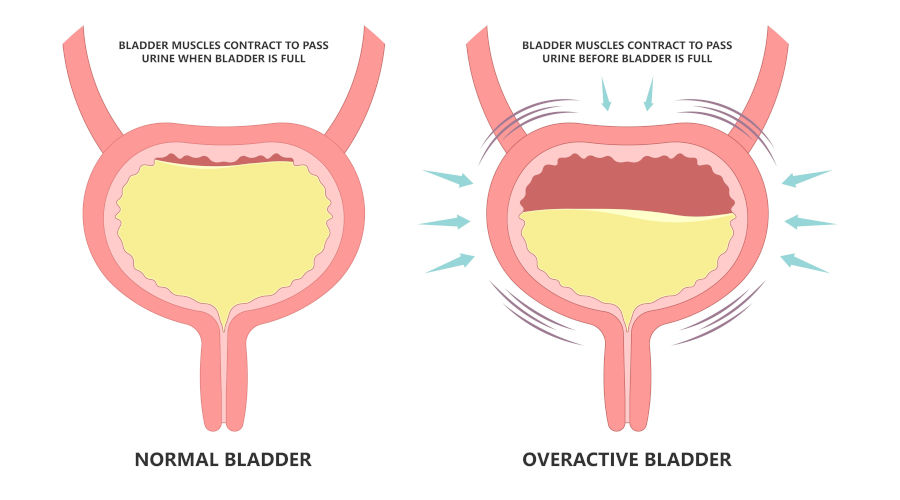
To get a handle on Overactive Bladder (OAB) syndrome, it helps to start with how the urinary tract is supposed to work. The bladder is a highly elastic, muscular sac that stores urine produced by the kidneys. Its primary wall muscle — the detrusor muscle — stays relaxed as the bladder fills. As it expands, nerve signals travel to the brain indicating that capacity is approaching, giving you plenty of time to find a bathroom. Only when you consciously decide to urinate does the brain give the green light: the urethral sphincters relax, the detrusor muscle contracts, and urine is expelled.
OAB is what happens when that relay breaks down. The detrusor muscle starts contracting on its own — uninvited — triggering a sudden, overwhelming urge to urinate even when the bladder is barely filled.
Clinical Symptomatology
OAB isn't a single disease — it's a cluster of disruptive urinary symptoms affecting millions of adults worldwide. It's more commonly diagnosed in older adults, but here's the thing: it's not a normal or inevitable part of aging, and it should never be dismissed as such.
A diagnosis of OAB is generally considered if a patient regularly experiences the following clinical symptoms:
- Sudden Urgency: The hallmark symptom of OAB. It is characterized by an abrupt, intense, and overwhelming need to urinate that is highly difficult to defer or suppress.
- Urgency Incontinence: This occurs when the sudden urge is so powerful that the detrusor muscle overrides the urethral sphincters, resulting in the involuntary leakage or complete loss of urine before reaching a toilet.
- High Urinary Frequency: The need to urinate eight or more times within a standard 24-hour period, despite normal fluid intake.
- Nocturia: The disruption of the sleep cycle due to the necessity to wake up two or more times per night specifically to urinate. This often leads to chronic fatigue and decreased daytime cognitive performance.
The Psychological and Social Impact
The physical symptoms are disruptive enough — but the psychological toll is just as real. The constant fear of leaking in public pushes many people toward social isolation: limiting travel, reshaping their professional lives, mentally mapping every restroom in every building ("toilet mapping"), and withdrawing from physical intimacy. It's no surprise that OAB is closely linked to elevated rates of clinical anxiety and depression.
First-Line Treatments and Behavioral Management
Since OAB is fundamentally a neuromuscular dysfunction, the first line of treatment isn't medication or surgery — it's behavioral modification and physical therapy. Those come later, if needed.
Bladder Training and Scheduled Voiding
The goal is to gradually stretch the bladder's capacity and retrain the brain to stop responding to those early, false urgency signals. You start by urinating on a strict schedule — say, every hour — whether or not you actually feel the urge. Over time, the intervals are slowly extended, teaching the bladder to comfortably hold larger volumes of fluid.
Pelvic Floor Rehabilitation
Targeted physical therapy — commonly known as Kegel exercises — strengthens the pelvic floor muscles and the external urinary sphincter. When you learn to voluntarily contract those muscles during a sudden urge, you can actually suppress the detrusor contraction before it gets out of control, heading off urgency incontinence before it happens.
Master Your Bladder Training
Retraining an overactive bladder starts with knowing your exact voiding intervals. A strict "voiding diary" lets you safely and gradually stretch the time between bathroom visits. Track your urine frequency, urgency levels, and fluid intake all in one place with Happy Poop.
The Neurological Mechanisms Behind OAB
Overactive bladder is usually described in simple terms — “the bladder squeezes before it should” — but the biology is more interesting than that. Normal urination depends on a carefully timed micturition reflex. As the bladder fills, stretch receptors in the bladder wall send afferent signals up the spinal cord to the brainstem and higher cortical centers. The bladder is supposed to remain quiet during this storage phase: the detrusor muscle stays relaxed, the outlet stays closed, and the brain decides whether it is socially appropriate to void. When everything is working normally, a person can feel bladder filling without being overwhelmed by it.
In OAB, that storage system becomes unstable. Some patients have true detrusor overactivity, meaning the bladder muscle generates involuntary contractions during filling. Others have marked afferent hypersensitivity: the nerves carrying “fullness” signals from the bladder fire too early or too intensely, so a small volume feels urgent. Central nervous system modulation can also change. The brain and spinal circuits that normally suppress voiding until the right moment become less effective, especially with aging, sleep disruption, chronic bladder irritation, or neurological disease. The result is the same to the patient: urgency arrives fast, feels disproportionate, and is hard to postpone.
Clinically, doctors often distinguish between OAB dry and OAB wet. OAB dry means the patient has sudden urgency, frequency, and often nocturia, but makes it to the toilet without leaking. OAB wet means urgency is accompanied by urgency urinary incontinence — urine leakage before reaching the bathroom. That distinction matters because OAB wet usually carries more distress, more social avoidance, and greater skin-care and sleep consequences. It can also influence how aggressively treatment is escalated.
Neurological conditions increase risk because they interfere with the same storage-and-release circuitry. Multiple sclerosis can disrupt spinal pathways involved in bladder inhibition. Parkinson’s disease alters basal ganglia control over urgency and bladder signaling. Stroke may impair cortical suppression, leaving the reflex less restrained. Spinal cord disorders, diabetic neuropathy, and pelvic surgery can also reshape bladder sensation and control. None of this means every person with OAB has a neurological disease. Most do not. But it does explain why OAB is a syndrome of neural regulation as much as muscle behavior.
Key idea: urgency is not just “having a small bladder.” In many people with OAB, the bladder-brain communication system is reacting too early, too strongly, or with too little inhibition.
Diagnosing OAB: What to Expect
OAB is mainly a clinical diagnosis, which means the most useful tools are still history-taking and pattern recognition. A clinician will ask when urgency started, how often you void during the day, whether you wake at night to urinate, whether leakage happens before reaching the toilet, what medications you take, how much caffeine and alcohol you use, and whether constipation, pelvic prolapse, diabetes, or menopause might be contributing. They also want to know what does not fit OAB — burning, blood in the urine, recurrent infections, pelvic pain, or difficulty emptying — because those clues may point somewhere else.
One of the most valuable parts of the evaluation is the 3-day voiding diary. This is not busywork. It documents the exact times of urination, the number of daytime voids, nighttime awakenings, episodes of urgency, fluid intake, and any leakage. In practice, clinicians often become suspicious of OAB when a patient voids more than 8 times in 24 hours, wakes 2 or more times nightly to urinate, or has urgency that repeatedly disrupts routine activities. Those thresholds are not perfect diagnostic cutoffs, but they are widely used clinical anchors. The diary also helps distinguish small frequent voids from normal frequency caused by very high fluid intake.
Basic testing is usually straightforward. A urinalysis is commonly ordered to exclude urinary tract infection, glucosuria, and microscopic hematuria. Blood in the urine or recurrent infections deserves a different workup. Many patients also have a post-void residual measurement, often by bladder ultrasound, to see whether they are emptying well. A high residual volume suggests retention, outlet obstruction, underactive bladder, or neurological dysfunction rather than classic uncomplicated OAB. That distinction is important, because an urgency medication given to someone who already retains urine can make matters worse.
More advanced testing is reserved for selected cases. Urodynamic studies can measure bladder pressure, capacity, compliance, and involuntary contractions during filling. They are not needed for every uncomplicated OAB presentation, but they may be warranted when symptoms are refractory, when the diagnosis is uncertain, before invasive treatment, or when there is a neurological disorder, prior pelvic surgery, or concern for mixed pathology. Some patients also need pelvic examination, prostate assessment, or imaging depending on age, sex, and accompanying symptoms.
The key point is that diagnosis is rarely about a single dramatic test result. It is about piecing together urgency, frequency, nocturia, leakage patterns, and exclusion of other causes. A good diary often contributes more to diagnosis than a one-time office visit ever could.
First-Line Treatments: Bladder Training and Pelvic Floor Therapy
For most people, the first treatment step is not medication. It is bladder training, because OAB often improves when the storage reflex is retrained rather than simply suppressed. The classic approach is timed voiding: instead of urinating every time the urge appears, the patient follows a schedule based on their current pattern. If someone is voiding every 60 minutes, they may start with a 60-minute schedule for a few days, then extend it to 75 minutes, then 90, gradually teaching the bladder to tolerate filling without panicked urgency. Progress is usually measured in small wins. Expecting the bladder to jump from hourly voids to three-hour gaps in a week is a recipe for frustration.
Delayed voiding drills are the next layer. When urgency strikes early, the goal is to postpone urination briefly and safely — perhaps by 5 minutes at first, then 10, then longer as control improves. That delay gives the brain a chance to relearn that urgency is not always an emergency. Just as importantly, it reduces the habit of “just in case” voiding, which can train the bladder to expect emptying at very low volumes.
Pelvic floor muscle training is often misunderstood as something useful only for stress incontinence, but it matters in OAB too. A quick, strong contraction of the pelvic floor can reflexively inhibit detrusor activity. In practical terms, that means a person can use a series of pelvic floor squeezes to ride out an urgency wave instead of sprinting for the bathroom. This is why many pelvic floor therapists teach patients to stop, stay still, contract the pelvic floor, breathe slowly, and let the urge peak and pass before walking calmly to the toilet. Biofeedback can help when patients are unsure whether they are contracting the correct muscles or when pelvic floor coordination is poor.
Urgency suppression techniques are simple but remarkably useful: freeze instead of rushing, relax the shoulders, perform several quick pelvic floor contractions, use mental distraction such as counting backward, and apply seated perineal pressure if trained to do so. Fluid timing also matters. Cutting back on excessive evening intake, moderating caffeine, and treating constipation can reduce pressure on the bladder. That last point is often overlooked: a loaded rectum can mechanically and neurologically worsen urinary urgency, which is one reason bowel tracking can be relevant even in a bladder-focused treatment plan.
Behavioral therapy works best when it is measurable. If you do not know whether your average voiding interval is 50 minutes or 95 minutes, it is much harder to build a realistic bladder training schedule.
Medical and Interventional Options
When behavioral therapy is not enough, clinicians move to medication and, in refractory cases, procedural treatment. The traditional drug class for OAB is the anticholinergics, which includes medications such as oxybutynin, tolterodine, and solifenacin. These drugs reduce involuntary bladder contractions by blocking muscarinic receptors in the detrusor muscle. They can be effective, but the side-effect profile matters: dry mouth, constipation, dry eyes, blurred vision, and sometimes cognitive effects, especially in older adults or in people already taking other anticholinergic medications. Because constipation can itself worsen urgency, not every patient tolerates this class well.
The newer alternative is the beta-3 agonist class, most commonly mirabegron. Rather than blocking acetylcholine, mirabegron relaxes the bladder during the storage phase by stimulating beta-3 receptors. Many clinicians prefer it for patients who cannot tolerate anticholinergic side effects or who are at greater risk of cognitive burden. It is often easier on the mouth and bowels, though blood pressure monitoring matters because mirabegron can raise blood pressure in some patients. In real-world practice, the choice between classes depends on age, blood pressure, constipation tendency, polypharmacy, glaucoma status, and how disruptive urgency leakage actually is.
If medications fail or are not tolerated, there are effective next-line options. OnabotulinumtoxinA (Botox) injected into the bladder wall can reduce detrusor overactivity by blocking acetylcholine release at the neuromuscular junction. For the right patient, it can substantially improve urgency and urge incontinence. The tradeoffs are important: symptom relief is temporary, repeat injections are needed, and some patients develop urinary retention or urinary tract infection afterward, so follow-up is essential.
Sacral neuromodulation, often known by the brand name InterStim, uses an implanted device to modulate the sacral nerves that coordinate bladder and pelvic floor function. It is generally considered for carefully selected patients with refractory symptoms who have not responded to conservative therapy and medication. A less invasive neuromodulation option is posterior tibial nerve stimulation (PTNS), where a small needle electrode near the ankle stimulates the tibial nerve in regular outpatient sessions. PTNS works through shared sacral pathways and can be surprisingly helpful for urgency and frequency, especially in patients looking to avoid more medication.
The message here is encouraging: OAB treatment is no longer a dead end between “just live with it” and surgery. There is a ladder of options, and many people improve by combining targeted medication with the same diaries and behavioral habits that made the diagnosis clear in the first place.
Tracking Bladder Health with Happy Poop
A voiding diary is one of the most useful tools in OAB care, but paper logs are easy to abandon because they are repetitive and hard to review. Happy Poop turns that diary into something much more usable by letting you track both pee and poop entries in the same place. For bladder symptoms, that means recording the time of each urination, frequency through the day, whether urgency was present, where you were, whether leakage occurred, and what the night looked like. For many patients, that single timeline is the difference between saying “I go all the time” and discovering that the real pattern is every 75 minutes in the afternoon, four urgency episodes after coffee, and two nocturnal voids on late-dinner days.
The app becomes even more helpful because OAB rarely exists in isolation. Constipation can worsen urinary urgency, and some people alternate between bowel and bladder flares depending on travel, hydration, menstruation, or medication changes. Happy Poop’s multi-data overlay chart lets you compare those variables on the same timeline, which makes it easier to spot day-versus-night differences, identify clusters of nocturia, and see whether urgency spikes alongside stool retention, missed sleep, or high caffeine intake. On the bowel side, the AI Analyze button in the poop log entry screen can automatically classify Bristol type, color, and quantity from a photo, making it faster to capture the constipation pattern that may be pushing the bladder in the wrong direction.

Custom traits make the bladder log clinically richer. You can create tags such as urgency, leakage, nocturia, pad change, burning, coffee, or pelvic pressure. That level of detail helps when you are doing bladder training, because you can tell whether your timed voiding intervals are lengthening or whether urgency episodes are just clustering in one part of the day. It also helps in medical visits. Bringing a clean history of voiding frequency, nighttime awakenings, and leakage episodes is far more useful than trying to reconstruct it under pressure in an office.
Zeps, Happy Poop’s beetle mascot and AI assistant in the Dashboard, adds another layer by analyzing your logged history for you. Zeps can highlight unusual frequency patterns, surface recurring links between urgency and certain times or habits, answer questions about your own trends, and suggest where your data may deserve closer attention. For example, Zeps might point out that urgency leakage happens mostly during the commute, that nocturia is rising over a two-week period, or that daytime frequency improved after caffeine reduction but nighttime voids did not. That kind of feedback can make self-management and follow-up visits much more focused.
Useful for treatment follow-up: if you start bladder training, a pelvic floor program, mirabegron, or an anticholinergic, keep logging for at least a few weeks. The trend is what tells you whether urgency is truly improving or just varying from day to day.






Sources & Medical References: